

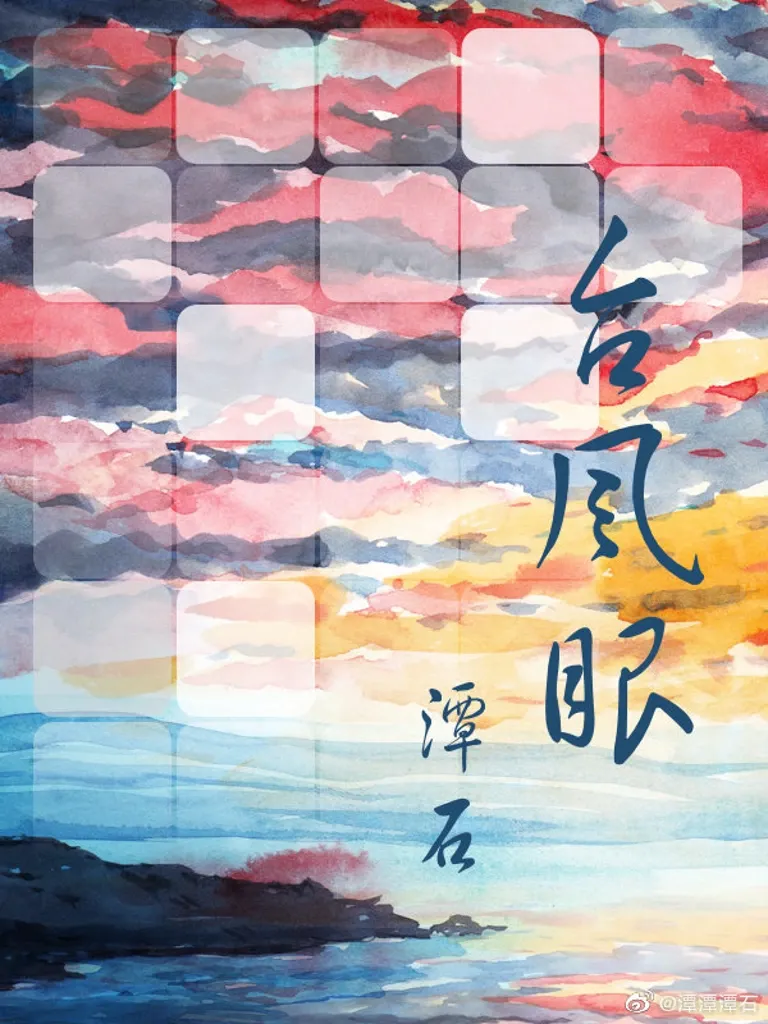
The Eye of the Storm
TAGSdanmeimodernshowbiz
A celebrated actor and a film producer meet again ten years after the summer that changed their lives—carrying a history neither has fully understood or left behind.
Chinese Title: 台风眼
Pinyin: Tái Fēng Yǎn
Common English Title: The Eye of the Storm
Also Known As: Typhoon Eye · Eye of Storm
Author: Tan Shi (潭石)
Original Publication: Changpei Literature · Complete · 11 numbered chapters divided into 127 serialized parts, plus extras
❤️ Main Relationship
Liang Sizhe (梁思喆) × Cao Ye (曹烨)
An acclaimed actor whose apparent ease conceals a difficult past, and a director’s son turned film producer whose history with him reaches far beyond professional collaboration.
Their connection begins before fame fixes either man into a public identity. Meeting again as adults brings an unusual tension: they know an earlier version of each other intimately, yet cannot assume that knowledge explains who the other person has become.
The author tags the relationship 互攻, meaning a switch or reversible couple. Neither character should be assigned a permanent gong/shou role in the wiki.
✨ Introduction
The Eye of the Storm is a contemporary danmei novel by Tan Shi, combining a film-industry setting with a slow reunion romance told across two timelines.
As teenagers, Liang Sizhe and Cao Ye spend a summer on Yinsi Street preparing to audition for the same film. Liang Sizhe has lost his previous path as a promising musician; Cao Ye is the son of the director offering him a new one. What begins as proximity between two possible rivals develops into a bond that matters more to them than winning the role.
Liang Sizhe’s performance launches an extraordinary acting career. Their relationship does not follow the same upward trajectory. Family conflict, misunderstandings, and separation leave the two with very different ways of carrying that summer into adulthood.
Ten years later, a film’s reshoots bring them back into contact. The novel moves between that uneasy professional reunion and their earlier closeness, gradually revealing why something that once seemed so natural became so difficult.
🌏 Background
The story works across two versions of the entertainment industry: the uncertain space before a first major role and the established world of productions, reputations, and commercial decisions.
The teenage storyline gives the characters time together before either has settled into his adult position. The present-day storyline asks what remains of that intimacy when one is a famous actor and the other works on the production side.
Filmmaking provides a reason for them to share time, attention, and decisions. For a reader, the interesting friction is that professional cooperation can resume before personal trust has caught up.
Timeline guide: Chapter titles marked N refer to the present; P refers to the past. Read in publication order. The alternating structure is part of how the relationship becomes legible.
🎭 Themes & Tone
- Knowing someone across time: Familiarity can preserve affection while also trapping people in old interpretations.
- Talent and opportunity: A career can depend on another person’s generosity without making the resulting relationship simple.
- Love before recognition: Feelings and their consequences may become visible long before both characters can name them.
- Loyalty and perceived betrayal: What someone appears to choose can matter as much as what they intended.
- Public success, private uncertainty: Acclaim offers no automatic solution to unfinished emotional history.
Tone: Cinematic, bittersweet, intimate, and patient. The playful announcement in the author’s short synopsis should not be mistaken for a promise of a brisk romantic comedy.
👥 Main Characters
Liang Sizhe (梁思喆) A gifted actor whose route into cinema follows the loss of a future in music. He is seventeen in the teenage storyline and twenty-seven at the adult reunion. His career is highly visible; the meaning of his history with Cao Ye is much less easily read from the outside.
Cao Ye (曹烨) The son of filmmaker Cao Xiuyuan and, in the adult storyline, the head of Luomeng Media. He is fifteen in the earlier timeline and twenty-five at the reunion. His position links family history, professional choices, and his relationship with Liang Sizhe.
Cao Xiuyuan (曹修远) Cao Ye’s father and the director whose film creates Liang Sizhe’s breakthrough opportunity. His place in both men’s lives makes the relationship between patronage, loyalty, and family especially consequential.
✨ Title & Reading Lens
A typhoon’s eye is the comparatively calm region inside a violent weather system. As an editorial interpretation, the title offers a fitting way to approach the romance: closeness can promise shelter even when the surrounding history remains turbulent.
The title does not imply a disaster-survival plot. The storm is a useful image for emotional and external pressures rather than a genre label.
🔥 Why It’s Popular
The past changes how the present reads. An adult exchange can initially look cold, evasive, or strangely charged. An earlier scene then supplies a reason to reconsider it. This makes remembering part of the romantic experience, rather than simply background information.
The teenage summer gives the reunion something specific to recover. The relationship is grounded in shared preparation, an ordinary neighborhood, and the possibility of a different future. Readers can invest in what these particular people once had, instead of relying only on the abstract appeal of a second chance.
The work setting can carry emotional tension. An actor and a producer have practical reasons to meet even when private conversation is difficult. That makes collaboration an effective setting for encounters whose emotional stakes exceed the task at hand.
The central question extends beyond attraction. Desire alone cannot explain or resolve an estrangement. The more compelling question is whether their adult understanding can accommodate what each failed to understand before.
The pacing is also a point of division. Reader responses on Novel Updates include praise for the gradual revelations and frustration with the timeline switches. The structure is a major part of the appeal, but readers who want uninterrupted forward momentum may experience it as a barrier.
📚 Reader Notes
Editorial reading-fit guides based on the synopsis, structure, and documented reader responses; these are not aggregate scores.
Beginner-friendly: ★★★☆☆ The contemporary setting is approachable, but this is a substantial novel with two timelines and a relationship that is intentionally not explained immediately.
Angst level: ★★★★☆ Separation, family conflict, and the gap between intention and interpretation create sustained emotional pressure. A happy ending does not mean an easy route to it.
Plot complexity: ★★★☆☆ The main challenge is connecting past and present, rather than learning an elaborate fantasy system. It helps to pay attention to what each character knows at a particular point.
Romance visibility: ★★★★★ The relationship is central throughout, even when its definition remains uncertain. Romantic focus does not mean an early confession or immediate couplehood.
Mystery focus: ★★☆☆☆ There is a strong “what happened between them?” question, but this is a relationship drama rather than a detective story.
Pacing: Very slow burn. The emotional payoff depends on accumulating context across the two timelines.
Best for: Readers who enjoy cinematic settings, emotionally restrained characters, first-love history, and reunions that require a revised understanding of the past.
May not suit: Readers seeking short, fluffy showbiz romance, fast relationship milestones, or a strictly chronological narrative.
Content notes: References to sexual abuse involving a minor, entertainment-industry sexual exploitation, homophobia and homophobic jokes, grief, and family conflict. These warnings concern the wider story and should not automatically be read as descriptions of the central couple.
🎬 Adaptations
Chinese audio drama — Maoer FM / MissEvan An official adaptation is available from Maoer FM and Sancao Culture. The principal cast includes Hao Xianghai (郝祥海) as Liang Sizhe and Shi Zekun (史泽鲲) as Cao Ye. An official second-season episode page confirms the production credits and a June 26, 2024 launch for that release.
Chinese manhua — Bilibili Manga The official listing credits Changpei Literature, Tan Shi, 魔仙社, and 莫一一. Treat the manhua as a separate adaptation; its episode total should not be used to infer the novel’s length or coverage.
Motion comic A February 2026 promotional announcement identifies a Bilibili motion-comic adaptation produced by Bilibili Manga and 抖漫工作室. This is distinct from a full-animation television adaptation.
❓ FAQ
Is The Eye of the Storm a danmei novel? Yes. It is a male–male romance by Tan Shi, originally published on Changpei Literature.
Who is the gong and who is the shou? The author labels the pair 互攻: a switch couple. Listing one permanent assignment would misrepresent that tag.
Is it really only eleven chapters? The eleven numbered chapters contain 127 serialized parts. Think of it as a full-length novel, not an eleven-installment novella. Extras also vary by platform and print edition.
Do I need to read Rear-End Collision first? The titles share a universe, but this novel introduces its own central relationship and can be approached on its own. Reading the related work adds context rather than providing a required opening volume.
✍️ About the Author
Tan Shi (潭石) is a Changpei author whose works include Paper Plane (纸飞机), Rear-End Collision (追尾), The Eye of the Storm (台风眼), and Pi Nang (皮囊).
For readers exploring this author, the most useful choice is the kind of relationship and setting they want next: the same fictional entertainment world, another intense youth-centered story, or a different premise entirely.



© 2026 Sumeru Labs. All rights reserved.
About Us | Privacy Policy | Terms of Use | Community Guidelines