

Get Better Every Time Danmei Novels
 MoonlitAudioDrama
12 items
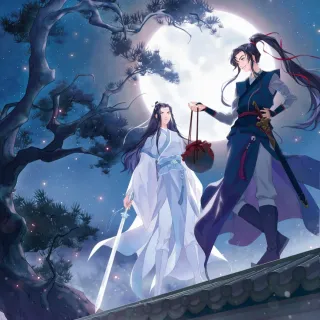
- 1. The opening line is a lie, and the whole cast knows itI still remember how it starts: 'Wei Wuxian is dead — what a cause for celebration.' Thirteen years later the world gets him back, and the book spends its whole length asking whether the world deserved to hate him in the first place. This is the one I reread for the ensemble — the villains get whole backstories, the side characters get better arcs than most leads, and there's a line fans still use as a moral compass: don't judge what you haven't seen in full. Fair warning: the timeline jumps between past and present, and the first time through you will be lost for a while. The second time, you see the author was holding all the cards from page one.
Grandmaster of Demonic Cultivation
A historical fantasy tale of two powerful men who find each other through life and death.
- 2. Eight hundred years of waiting, and the line everyone quotes wrongHere's the thing about this book: the line everyone attributes to the ghost king — 'when you're riding high, it's you; when you're lying in the dust, it's you; what matters is you' — is actually the god saying it to him. That's the whole story in one sentence. A crown prince falls three times, loses his kingdom, his believers, everything, and one person spends eight hundred years getting strong enough to stand next to him again. The lantern scene is why people reread it — there's an image in there (three thousand lanterns, a city in bloom) that the fandom has been drawing and redrawing for years. Some readers find Xie Lian too good to be true. I reread it precisely when I need someone to be that good.
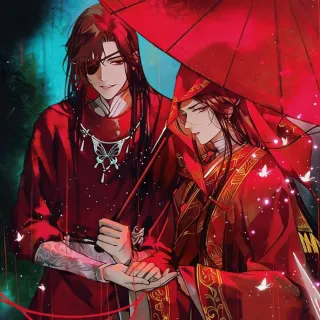
Heaven Official’s Blessing
A fallen god meets a mysterious ghost king who has waited for him for centuries.
- 3. The sentence people tattoo on themselves comes from a steel townEvery fandom has one line that escapes the book, and here it's this: 'full of hope, you are unstoppable.' It gets printed on bookmarks and graduation cards, and honestly it earns it — Jiang Cheng arrives in a dying steel town with nothing, Gu Fei is a 'gangster' holding his broken family together with both hands, and the two of them quietly become each other's backbone. I lend this one to friends before big exams and hard years. What I tell them first: the first stretch is genuinely bleak, the prose is full of slang and swear words, and nothing is glamorous. Stick past it. The readers who finish don't call it a romance — they call it the book that got them through school.

Run Wild: Sa Ye
Two teenagers from very different worlds find comfort and strength in each other while learning how to survive family struggles.
- 4. 'The monsters are all cleared out. I'm the last one — will you lock me up at your place?'That line is why people reread Mo Du. Fei Du says it joking to the cop who's the only person alive he trusts, and the first time you laugh; the second time you know exactly what it cost him. The cases are named after literature — The Idiot, Macbeth, Demons — and each one is about how an ordinary person slowly goes rotten. Luo Wenzhou grew up soaked in love and stayed open to the world; Fei Du grew up in a cage and calls himself a monster, and watching the first man patiently talk the second one out of that belief is the actual plot. Rereading is half the fun, because every early joke lands sideways once you know him. One warning: the crimes are dark, and there's a reason the fandom tags the book 'don't read before bed.'

Silent Reading: Mo Du
A cynical police officer and a sharp, enigmatic entrepreneur uncover the psychological truths behind complex criminal cases
- 5. A man with three years to live, finally free, finally himselfZhou Zishu spends a decade as the blade of a spy network, then nails his own body shut — seven nails, three years of life, bought for one thing only: to wander and drink as himself. He meets Wen Kexue on the road, a shameless man who turns out to be exactly his kind, and the two of them make every one of those borrowed days count. What brings me back is how unsentimental it is about it. There's a scene where someone cries over a dead friend and Zhou Zishu just says, people have to die sooner or later — so why cry? It sounds cold until you realize it's the only honest thing anyone says in the whole jianghu. It's the wuxia I recommend to people who think they hate wuxia: no chosen ones, just two tired adults who recognize each other. It stands alone, though if it ruins you the way it ruins everyone, the prequel Lord Seventh is right there.

Word of Honor / Faraway Wanderers
A former assassin seeking freedom meets a mysterious wanderer, and together they uncover a hidden conspiracy.
- 6. Two million taels can't buy the Wolf of Libei — but one smile canIf you've spent five minutes in Chinese danmei spaces, you've seen the vows from this book floating around: 'two million taels can't buy the Wolf of Libei — what I want is the smile money can't buy.' 'Sit in the bright hall and don't touch the wind and snow.' 'I want to live a hundred years with you where nobody can reach us.' They're everywhere, and after reading the book my reaction was: oh good, they're not overrated. A disgraced traitor's son with a ledger of grudges and a hostage prince raised on the steppes start out wanting each other dead, and over a million characters claw their way to the top of a rotting empire — the romance and the power game are the same story. Heads up from every reader I know: it's long, it's dense, and the first hundred pages are a wall. Get over the wall and people reread it yearly like a ritual.
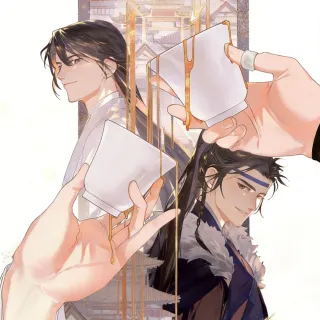
Ballad of Sword and Wine: Qiang Jin Jiu
Two rivals caught in political chaos form an uneasy alliance in a collapsing empire.
- 7. The general who can't hear or see fights better than the whole empireI put off this one for years because 'steampunk xianxia' sounded like a gimmick. It's not — it's Priest rebuilding an alternate Great Liang with steam engines and violet-gold fuel, and then giving it Gu Yun, a general who jokes constantly about his own failing ears and eyes while single-handedly holding the border together. The boy he rescues from the snow, Chang Geng, grows up quietly deciding that if the world is what it takes to protect this man, then he'll take the world. Readers quote two lines from this book more than anything else in the genre: 'those who haven't known suffering don't believe in gods or buddhas,' and 'if the age is at peace, we'll fish and farm by the rivers; if it totters with the abyss beside it, we will give our ten thousand deaths.' The romance is slow and stays restrained — the devotion is the romance. Give it thirty chapters; it's the one people finish and then immediately miss.
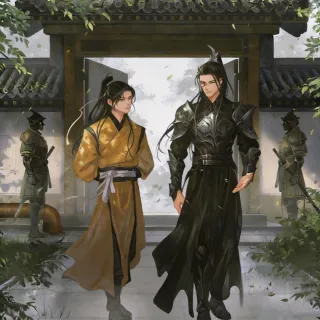
Stars of Chaos: Sha Po Lang
In a steampunk-inspired empire, a young commander and his mentor fight war, politics, and fate.
- 8. 'The world is bright and grand. Welcome home.'That line is the reason this book has its own shrine in the fandom. Global Examination traps people in a deadly test run by a rogue system: fail and you die, pass and you get the next exam. Examiner A and Invigilator 001 keep meeting across wiped memories — the system deletes them, the exams reset them, and they fall for each other anyway, three times, from scratch. The side cast is what makes the reread hurt so good: everyone remembers 154, the program who chose to stay behind. What longtime readers tell newcomers, and I'll pass it on: don't read it for the puzzles — the solutions are whatever the author decides is cool that day — and don't trust the system, or your own heart, near the ending. Read it for the feeling. The feeling is the whole point.
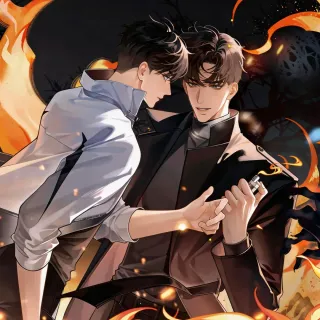
Global Examination
Strangers trapped in a deadly system must clear impossible tests together, discovering hidden truths and emotional connections.
- 9. 'I searched for you for ten thousand years — I hope you remember we had a promise'Shen Wei's love in this book operates on a timescale that breaks the brain: he saw Kunlun once, at the foot of the Denglin tree — one glance, and his heart never recovered — then waited through ten thousand years and countless reincarnations to find him again. That's why the fandom still writes the lines on everything: 'a promise made; ten thousand mountains won't stop me; even if I carry it against the current forever, I go.' On a reread you catch what the first pass hides: how carefully Shen Wei measures every word so Zhao Yunlan never learns what he is, and how the whole cast of the Special Investigation Department slowly thaws him out with late-night skewers and bad jokes. Zhao Yunlan, all swagger and warmth, is the reason the ten-thousand-year ice is worth melting at all. Caveats from the rereaders: the case-of-the-week chapters are uneven, and the hit 2018 drama made it famous but flinched from the book's ending. The book doesn't flinch.

Guardian: Zhen Hun
A special investigator and a mysterious professor uncover supernatural secrets.
- 10. He offers him a dragon's lifespan; the monk says 'I could ask for nothing better'Xue Xian is a true dragon with his bones stolen out of him — half paralyzed, stuck in a paper body, hunting the people who did it — and Xuan Min is an amnesiac monk who feng-shui'd a haunted house on his first day in town and swept the dragon up along with it. The whole book is them bickering ('you bald donkey,' 'you cursed thing') through one ghost-story case after another, each case a small knot of debt and repayment. Readers come back for the texture: the jokes land every time, and then a single exchange stops your heart — Xue Xian binds their lifespans together with a smug 'too late to regret it now, you're stuck with me for a thousand years,' and the coldest man in the book looks him in the eye and answers, quietly, 'I could ask for nothing better.' The old readers' consensus on pacing is honest: the first stretch is slow, and it doesn't really tighten until the halfway mark. What waits on the other side is the coziest kind of hurt.
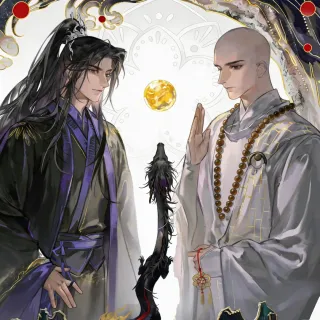
Copper Coins: Tong Qian Kan Shi
A foul-mouthed dragon bound to a monk’s side travels across a mystical landscape, confronting ancient karma, forgotten pasts, and an unlikely bond that slowly transforms into devotion.
- 11. 'More precious than knowledge is curiosity — more precious than curiosity is the starry sky above our heads'Priest wrote a space opera. A general exiled to the lawless Eighth Galaxy, a young idealist who refuses to stop believing in people, and a corrupt alliance selling its own citizens — and the famous opening about what's more precious than money, than knowledge, than curiosity, is the thesis the whole book keeps paying back. Rereading is a different book than reading: the first time you're carried by Lin Jingheng's competence porn and the revolution; the second time you see how every idealistic speech is quietly setting up what it costs to keep believing. What I owe you as a recommender: this is the most quote-dense novel in the genre, and it splits the room exactly there — fans underline those passages until the pen runs dry, detractors call them bumper stickers. Nobody is neutral. Find out which one you are.

The Defective
In a fractured interstellar society, a disgraced commander and an idealistic teacher fight for freedom.
- 12. 'Humanity's interests above all. Wrong — and still right'A little mushroom who gains a human shape goes looking for his lost spore and walks straight into the last human base at the end of the world, where Lu Feng — the coldest, most feared judge in the settlement — decides whether the infected live or die. Yiyishizhou writes apocalypse like nobody else in danmei: quiet, procedural, gently devastating, with a body-horror undertow that sneaks up on you. Readers who came for the meme-able setup stayed for the questions — what a species owes itself, and the line everyone argues about, the one that says humanity's interests come before everything, wrong and still right. The romance is deliberately faint for a long time; the mood is the romance. Reread it for the ending, which lands differently once you know what An Zhe is. Fair warnings: it's bleak, named people die, and the author will make you grieve over a mushroom.
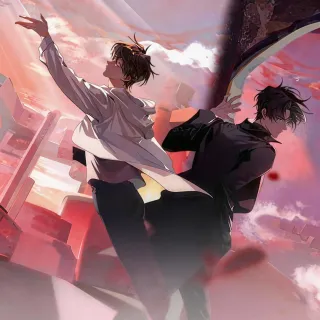
Little Mushroom
In a post-apocalyptic world, a gentle mushroom spirit disguised as a human forms an unlikely bond with the ruthless judge who decides who lives and dies.