

Fate, Feng Shui, and Ghosts(Metaphysics)Danmei
 MoonlitAudioDrama
6 items
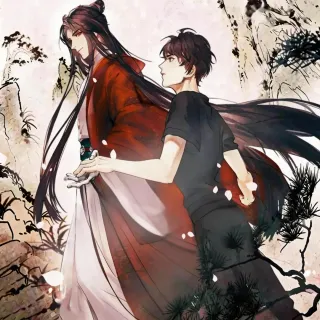
- 1. He worships a hideous portrait, and the sitter walks inThe scene every Panguan reader quotes at you: Wen Shi, a prickly descendant of a long line of judges of the dead, keeps a family rule of bowing daily to his founder's portrait — a portrait he painted himself, in colors he admits are 'green-faced, fangs bared, garish as a festival.' Then a sickly, smiling tenant moves into his house, glances at the wall, and asks, mildly, who painted that. Wen Shi: 'I did.' That is the scene readers keep bringing up from this book — a boy who guards tradition with a scowl and a man who has loved him across more than one lifetime, patiently pretending not to. The jokes are warm; the past underneath them is not. The early chapters are slow; old readers will tell you to trust them.
Panguan
A quiet young man becomes entangled in a hidden world of supernatural judges who resolve lingering grudges between the living and the dead.
- 2. His life's ambition: get the monk to 'pass away with a smile'Xue Xian was a dragon — a real one — until someone stole his bones and left him half-crippled, and his response to the indignity is the first thing fans quote. His official life goal, quoted endlessly in fan circles: 'If you're unhappy, I'm happy. The day you enter nirvana, I'll die laughing.' The monk in question, Xuan Min, is a cold, amnesiac exorcist who does not find this funny, which is exactly what makes it funny. Readers describe the experience as a proper, weighty fantasy about wandering souls and old debts performed by a cast of elderly, disabled ghosts with the energy of a crosstalk troupe. Six volumes, each named for a stage of seeking, with grief running under the banter. Give it a few chapters; the warmth sneaks up on you.
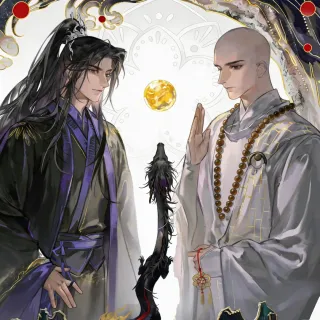
Copper Coins: Tong Qian Kan Shi
A foul-mouthed dragon bound to a monk’s side travels across a mystical landscape, confronting ancient karma, forgotten pasts, and an unlikely bond that slowly transforms into devotion.
- 3. The one line fans tattoo on their heartsXi Zi Xu's feng shui classic pairs Lin Zhushui — a blind grandmaster so powerful he reads fate like weather — with Zhou Jiaoyu, a reborn civil servant stuck in a con man's body whose constitution is, inconveniently, the one perfect match for his master's. The line the community has kept alive: 'The person Lin Zhushui has decided to protect — you call that a weakness?' What long reviews keep adding, and what I'd tell you myself, is that this book is kinder than the author's horror hit: the lovable side characters — the four hapless disciples, the rival masters — actually get to live, and you can feel how much that generosity changed the reading experience for people. Warm, funny, occasionally spine-chilling. No real caveats here.

My Five Elements Lack You
A supernatural romance by Xi Zixu: a reborn civil servant in a scammer's body lands in the household of the blind great master of feng shui.
- 4. It opens on a night train, and nothing is wastedMeng Xi Shi's million-character epic starts where the blurb starts: a night train heading north, where a burnt-out game artist named Dong Zhi meets his first ghost, his first mentor, and Long Shen — the cold, absurdly capable man who will become both his teacher and the center of his life. What reviewers keep saying, and I checked it myself, is that you can feel the author had the whole map from page one: setups from the early cases pay off volumes later, and the fight scenes are choreographed like set pieces. The found family at the Special Management Bureau — a gossip who talks like a maiden aunt, a five-hundred-year-old flood dragon whose true form is a food-motivated cat — is why people forgive the length. The honest warning: it is very long, and some readers find the final stretch strained. Worth it if you like your slow burn to actually be slow.
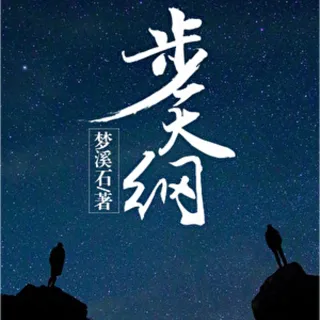
Bu Tian Gang
A burnt-out game artist joins the secret government bureau that handles supernatural incidents — and apprentices under its most formidable, most distant officer.
- 5. The underworld, but it sends formal SMS citationsYu Zhengdu takes a programming job at a tiny 'life management consultancy' and learns on day one that his employer is the underworld, modernized: ghosts are handled with yin-energy scanners, phone-call summonings, and formal written warnings for violating the Ghost Employment Regulations. Zhihu rec posts keep describing the experience as deadly serious nonsense — superstition explained with science — and that description shows up in nearly every recommendation. Audio drama fans describe the adaptation as the scariest background music in the business telling the silliest ghost stories. A Douban comment said the idea of messaging a deceased relative who hasn't reincarnated yet genuinely moved her, and that is the book's secret: the jokes are delivery system, not substance. Fair warning from the same commenters: the villains are dumb and the golden fingers easy. You are here for the tone, not the tension.

New Times, New Hell
A supernatural workplace comedy: a programmer joins a "life management" startup and discovers his boss is the Ghost King modernizing the underworld.
- 6. 'Violates the heavenly way' is, in his defense, edibleWei Xi is a Taotie — an ancient glutton — who comes down the mountain to revive his sect and discovers the modern world: rent, social insurance, and hunger that only eating lonely ghosts can fix. The scene the comment sections still quote is a ghost crashing a film set to audition for a horror movie, getting pinned, and wailing its innocence while Wei Xi, hand on its neck, reasons that it 'harbors ill intent and violates the heavenly way' — and in his book, anything that violates the heavenly way can be eaten. His long-suffering companion spends the entire novel negotiating between the two of them. The author's own blurb warns you: the feng shui expertise is all nonsense, the protagonist is not human and does not think like one, and the book is gleeful about both. Read it as the comedy it is and you will laugh until you cry, as the reviews keep reporting.

Old Fogey Goes Down the Mountain
An ancient man-eating beast borrows a rich family's deadbeat son to revive his master's defunct Taoist sect — and discovers that modern entrepreneurship is harder than subduing demons.