
Enemies to Lovers
MMoonlitAudioDrama
15 items
There's a special pleasure in watching two people sharpen themselves on each other until they realize what they've actually been making. Fifteen rivalries here — court factions, sects, business wars, esports grudges — ordered from 'the banter is the foreplay' to 'this will take several hundred chapters and possibly dynasties.' Fair warning: the front half is fun, but this trope's dark end is real, and one entry on this shelf (Lantern: Watching the Blade) involves coercion the novel itself doesn't romanticize away — it's flagged in its note, read the tags before you start. If your favorite sworn enemies made peace, or better, didn't, I want to hear about it.
- 1. "Niangzi is rio"The entertainment-industry comedy where two actors' fandoms declare war while the actors themselves keep accidentally proving the shippers right. 'Niangzi is rio' — the ship name, sworn like an oath — escaped the fandom and became general internet slang for 'my ship is real and I have evidence.' Pure serotonin, enemies-to-lovers played entirely through PR statements and variety show accidents.
- 2. The betrayal that split the league's best duoYu Sui and Shi Luo were the partnership the entire FPS league measured itself against, until one transfer destroyed it in a single night. Years later the truth about what actually happened that year surfaces one match at a time. Man Man He Qi Duo writes esports with genuine tactical texture — the in-game duels matter as much as the reconciliation — and the scene where Shi Luo finally asks the question is the one fans quote.
- 3. The most toxic rookie in the ladder meets his idolSoft built his reputation as the server's most feared trash-talker long before anyone knew his face; Road was the god he watched win championships as a kid. When the org signs the phenom to the captain's own roster, the flamewar becomes a practice schedule. Jiang Zi Bei writes genuinely funny esports, and the generational detail — idol versus superfan turned teammate — gives the bickering real stakes. Fast, quotable, and the memes have outlived the plot.
- 4. The wolf cub and the negotiatorPart of Shui Qian Cheng's 188 universe — Gu Qingpei, the brilliant professional manager, and Yuan Yang, the young heir planted in his company as a leash and a lesson. The age gap and the power struggle are the engine; what fans remember is that the 'wolf cub' devotion never curdles into softness on command. The 188 family all cameo across each other's novels, so finishing this one quietly opens three more doors.
- 5. Two heirs, one inheritance, zero mercyQi Xing and Ye Xingzhou run rival empires and can't stand each other in the boardroom or at the banquet table — which makes the slow discovery that the other person is the only one keeping up both delicious and dangerous. Bai Jie Zi writes adults with adult problems, and the 'true colors' of the title cuts both ways: neither lead is who their PR says they are. Enemies-to-lovers for readers who like their romance in tailored suits.
- 6. "Which part of me isn't outstanding?"Jian Suiying is the proudest man in the 188 universe and says so himself — 'Which part of me isn't outstanding?' is the line the fandom built him a throne from — and Li Yu is the cool, collected foil who makes the mistake of thinking pride is the same as invulnerability. This is Shui Qian Cheng at her most quotable and her most bruising; the emotional damage is the genre's calling card and this novel is a cornerstone of it. Heed the tags.
- 7. Ordered to marry his political enemyThe emperor grants the marriage as both reward and leash: two men who've spent years on opposite sides of the court, now sharing a household and a war. 'The rivers and mountains, given to you' — the line that doubles as wedding vow and threat — is why this one lives on recommendation threads. Cang Wu Bin Bai writes court intrigue where the marriage is the most dangerous piece on the board, and the leads spend half the novel deciding whether the other is the enemy or the alliance.
- 8. Two strategists, one divided empireThe era's two greatest strategic minds end up on opposite sides of a divided empire, and the war of wits stays sharp because both leads are as good as their reputations — Meng Xi Shi writes intelligence as chemistry, and the negotiations across the chessboard are the courtship. Political intrigue done properly, with a romance that has to survive the fact that each man is the other's hardest problem.
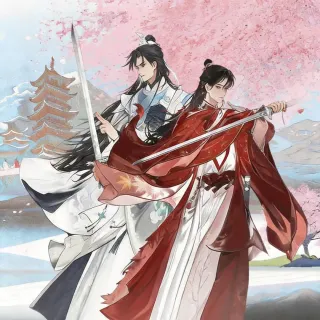
- 9. He kept the sword that betrayed himTwo sword cultivators on opposite sides of a war that ended long ago, bound by a sword that refuses to let its master forget what he did. The resentment here is ancient and earned, and the novel takes its time excavating which wounds were inflicted and which were inherited. For readers who want their enemies-to-lovers with fifty-year grudges and a body count in the backstory.
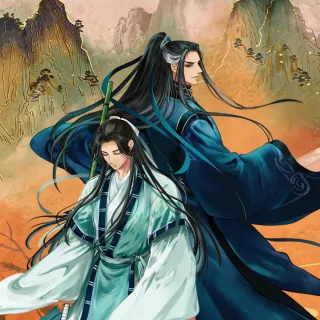
- 10. The demon lord's favorite experimentShen Qiao falls from the peak of the righteous world — betrayed, broken, memory gone — and the demonic sect's Yan Wushi picks him up not out of mercy but curiosity: he wants to see whether goodness can be trained out of a man, or into something he can use. Meng Xi Shi builds the entire romance out of that wager, and watching Yan Wushi slowly lose a bet he made with himself is one of the genre's great pleasures. Slow burn across sects and philosophies.
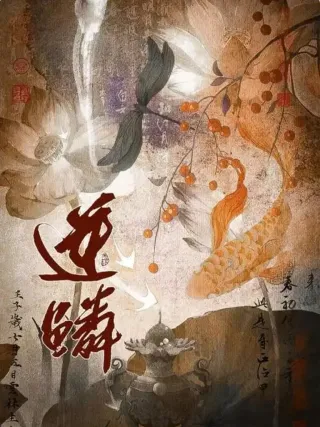
- 11. The dragon's reverse scaleEvery dragon has one scale that must never be touched — the reverse scale, the place that means death to the toucher and ruin to the touched. Yi Shisi Zhou builds a xianxia around that single image: a dragon bound for centuries and the person who keeps reaching for exactly the wrong place. The fantasy mechanics are the romance here; readers who like their tropes literal will be very pleased with where the title ends up pointing.
- 12. Three thousand years of unfinished businessXuan Ji handles the modern paperwork of ancient catastrophes for a living, and Sheng Lingyuan is the catastrophe that wakes up anyway. Their enmity predates the current era by dynasties, and Priest unwinds it in layers — the present-day bickering is funny precisely because the backstory keeps arriving to recontextualize it. Urban fantasy, ancient grudges, and one of the most structurally ambitious romances on this shelf.
- 13. The traitor general, and the man who can't stop loving himGu Mang is the disgraced general everyone believes sold out his own army, and Mo Xi is the man who loved him before the betrayal and can't make himself stop after. Rou Bao Bu Chi Rou writes devastation as a craft — the gap between what Mo Xi believes and what the reader slowly learns is the engine, and the emotional cost is paid in full. This is the heavy end of the trope; complete, and the ending is earned, but nobody calls it easy.
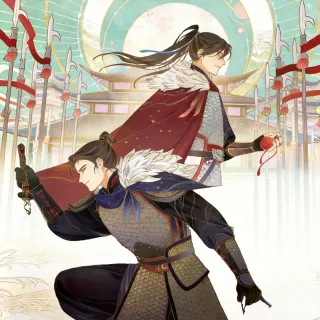
- 14. "You sit in the bright hall — don't let the snow touch you"Shen Zechuan claws his way out of disgrace and Xiao Chiye out of suspicion, and their court-war alliance runs on traded verses and shared knives. The line readers keep is Xiao Chiye's: 'You sit in the bright hall — don't let the snow touch you,' and Qi Huilian's deathbed defiance still floors people on reread. Politics, war, and a rivalry that becomes the empire's most dangerous partnership. Long, finished, HE.
- 15. Read the tags on this one — seriouslyHuai Shang's darkest entry: Chu Ci and Han Yue begin in violence and coercion, and the novel is honest enough that the fandom's first recommendation is always the content warning, not the plot. What keeps it on shelves is that the story knows what its beginning is — the redemption arc is built to be uncomfortable, and readers who finish it describe the payoff as devastating rather than romantic. Only pick this up if dark is what you came for.