

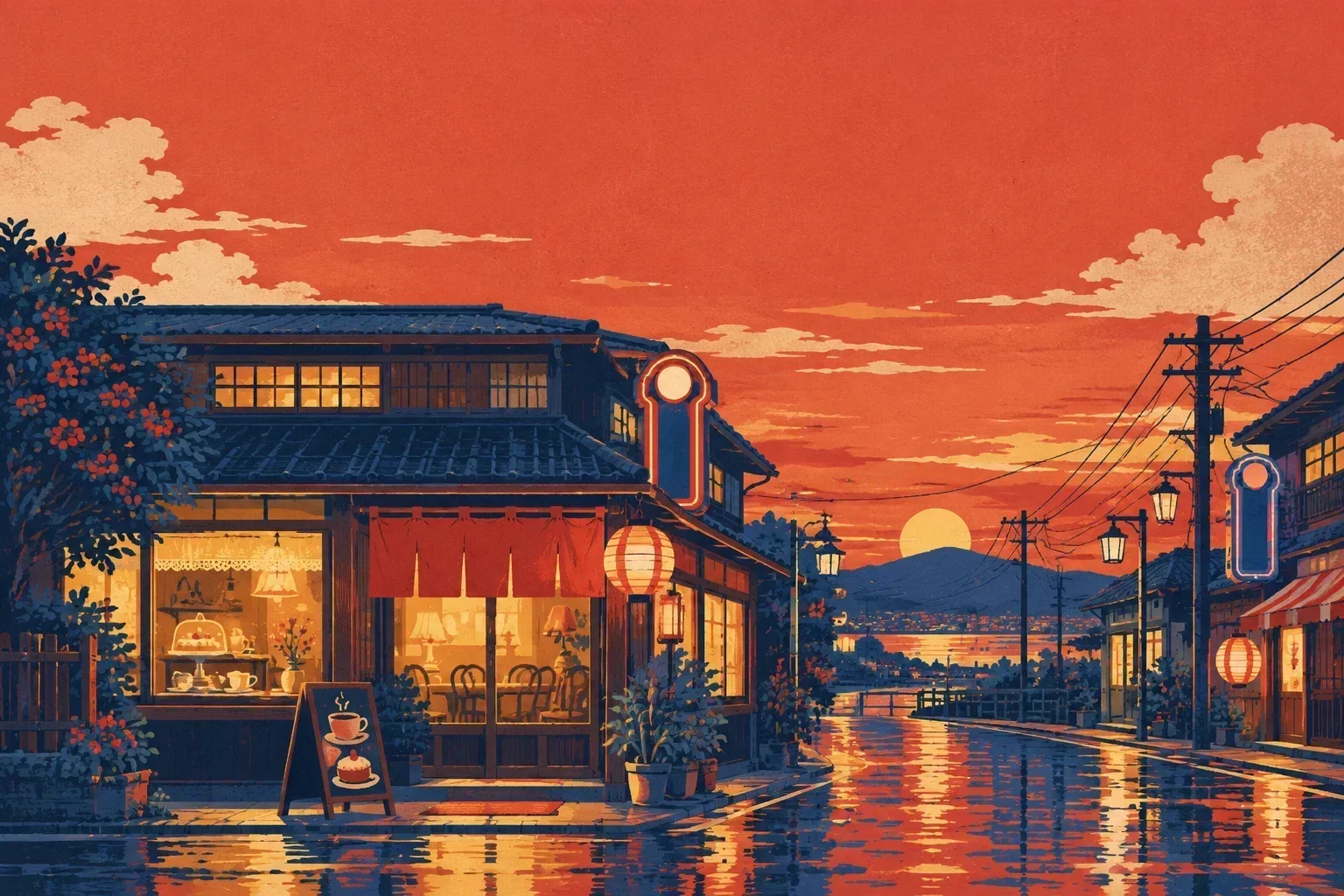
The word danmei looks Chinese, reads Chinese, and is Chinese now — but it’s a traveler. It was coined in Japan, spent its childhood in Showa-era girls’ manga, was adopted whole by Chinese web novels, and has lately been stamped into English as a genre label all its own. If you’ve ever filtered a shelf by the danmei tag, this is the biography of the word you were holding. And the era that made it is worth meeting on its own terms: the Showa era (1926–1989), sixty-three years that run from kimono-and-rickshaw streets to neon arcades — the longest, messiest aesthetic palette Japan ever had. Everything danmei inherited, from beautiful doomed boys to the insistence that beauty is a legitimate destination, got packed in Showa.
The word before the genre. 耽美 (tanbi) began as Japan’s early-twentieth-century translation of “aestheticism” — the Wilde-and-Baudelaire conviction that beauty is reason enough. For decades it was a literary attitude, not a genre: novelists pursuing sensuous beauty against the utilitarian grain, deliberately drowning in the beautiful, hence the characters — “indulged” and “beauty.” Nothing in the word required romance, let alone boys. Keep that original meaning in your pocket. The plot twist is that a word for wallowing in beauty was about to be inherited by exactly the readership most willing to wallow.
Showa gives the word its genre. In the 1970s — squarely Showa — a generation of girls’-manga artists born around Shōwa 24 (1949) seized the genre’s machinery, and critics later named them the Year 24 Group. Moto Hagio and Keiko Takemiya led the charge, and they reached for the old aestheticist vocabulary: European boarding schools, androgynous beautiful boys, devotion too large for the story to hold. Takemiya’s In the Sunroom (1970) is generally cited as the first commercially published shōnen-ai manga; Hagio’s The Heart of Thomas (1974) scaled the formula up and broke hearts with it; Takemiya’s Kaze to Ki no Uta (1976) ran it to operatic length. In 1978 the magazine June opened Japan’s first commercial venue dedicated to male-male romance, and through the 1980s the fan-made wing of the genre minted its own defiant nickname, yaoi. Somewhere in that late-Showa ferment, 耽美 quietly stopped meaning “aestheticism” in general and started meaning this — beautiful boys, written mostly by women, for women. A fiction, not a mirror of anyone’s real life; the genre has never once pretended otherwise.
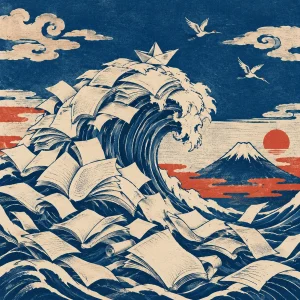
The word crosses the water — without leaving home. In the late 1980s and early 1990s, Japanese tanbi manga and novels reached Chinese-speaking readers in translation, and the borrowing came with the label attached: 耽美 — same characters, same word, now read in Mandarin. Chinese fandom adopted it wholesale and built an industry around it: publishing corners, audio-drama studios, a readership large enough to have weather. But this was never a handover. Japan kept writing BL the whole time, under the same two characters, and the word never left the Japanese language. What changed is smaller and stranger: the word now has two hometowns.
The word gets a second passport. By the late 2010s, English-speaking readers needed a way to talk about the wave of Chinese web novels arriving in translation — sprawling cultivation epics, hundred-chapter plots, tribulation and all — and the word on those covers, danmei, did the job. In English usage it now usually points at Chinese works, while Japanese material keeps its older labels, yaoi and BL. But that’s a filing decision made in English, not a split in the genre: the river is one river, and the characters on both banks are the same 耽美. Nothing fully one thing, everything slightly something else — which is, if you know the Showa look at all, exactly its signature.
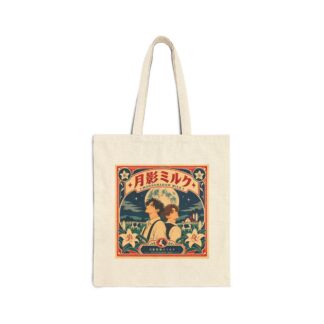
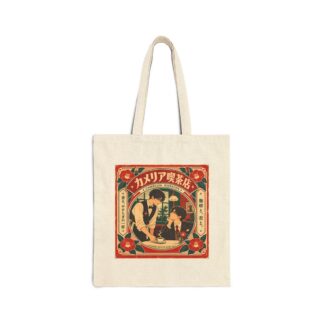
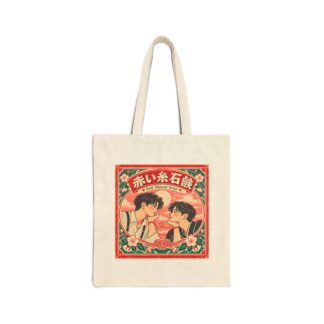
Wear the word’s hometown. Our three Showa-style packaging-parody totes borrow the era’s favorite graphic language — the shop-sign arc, the retro label, the serif that means “expensive and slightly sad.” Each bag carries one old-Japan brand that exists only on canvas: a kissaten, a milk label, a soap box — painted, named, and aged convincingly, like props from a shop that never was. Heavy 15×16 cotton canvas, no story attached; the aesthetic, carried properly, is the whole point. The Camellia Kissaten tote is the flagship: deep ink-green canvas, a hand-painted shop sign in Japanese script above the CAMELLIA KISSATEN lettering, two gentlemen sharing a quiet moment over coffee, red camellias framing the whole scene — a café you’d genuinely want to exist. The Moonshadow Milk tote redraws the era’s milk packaging as a midnight scene: a full moon, drifting clouds, two figures, white lilies in the foreground. And the Red Thread Soap tote turns a vintage soap box into the red-thread-of-fate joke: two figures leaning toward each other, one pink heart, sakura in the corners, a tied red string along the bottom edge. Three invented labels, one era, zero canon required.
Why Showa stays popular. Showa nostalgia is really nostalgia for the last moment before everything became the same — hand-painted signs, paper packaging, a shop that knew your order. The danmei word made the same journey the era’s objects did: imported, remade, re-exported, better for every border it crossed. That’s the romance of this word, and of this look. We keep buying it — one canvas bag at a time.
FAQ
When was the Showa era?
1926 to 1989 — the longest era of modern Japan, running from rickshaw streets to the first arcade cabinets. Nearly every visual cliché outsiders hold about “old Japan” and “neon Japan” at once is Showa.
Is “danmei” a Japanese or Chinese word?
Both — the word belongs to two languages at once. Japan coined 耽美 (tanbi) for aestheticism, 1970s–80s girls’ manga repurposed it for male-male romance, and Chinese fandom adopted the same characters in the 1990s. Japan still writes BL today under the same word. In English, “danmei” now usually labels Chinese BL web novels, while Japanese works go by yaoi or BL — one genre, two writing traditions, the same two characters.
What was shōnen-ai?
The 1970s shōjo-manga precursor of BL: beautiful boys, European boarding schools, devotion too large for the story — written mostly by and for women. The Year 24 Group’s Moto Hagio and Keiko Takemiya are its founding names.
Do the totes belong to a specific danmei story?
No — the shops exist only on the canvas: original illustrations in Showa retro packaging style, aged like they were found in a flea market. Zero canon; invent your own regulars.