


A shizun (shī zūn — “venerable master”) is the cultivation master of a xianxia sect: the senior who accepts a disciple, teaches the sword and the dao, and answers for their conduct before the elders’ hall. In danmei, the shizun has become the genre’s most reliable romance engine — not because of any single story, but because the position itself is built from three things romance can’t resist: absolute authority, enforced proximity, and vows that forbid the very feeling they make inevitable. And if the word still doesn’t ring a bell: for a lot of readers, the first shizun they ever met was Chu Wanning — The Husky and His White Cat Shizun is where much of the fandom first swore the oath.
Why the position itself is the plot. Anyone can write a forbidden romance; the shizun trope gets it installed at the factory. First, authority: the shizun outranks the disciple in cultivation stage, sect law, and moral standing, so the power differential isn’t an obstacle the story has to work around — it’s the load-bearing wall. Second, proximity: teaching in xianxia is physical in a way classrooms never are. Meridians are opened by hand, sword forms corrected wrist by wrist, poison drawn with spiritual energy passed lip to lip. The genre hands writers a full catalog of legitimate reasons for two people to touch, then makes them pretend it means nothing. Third, oaths: disciples swear loyalty, masters swear protection, and both oaths are sworn in front of people who would kill them for breaking them. The tension doesn’t need to be manufactured. It was installed at the factory.
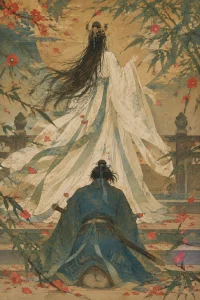
The two flavors — and who each one is for. Shizun stories mostly come in two recipes. The fall starts with an untouchable shizun — the sect’s brightest blade, its moral ceiling — and watches what happens when that ceiling develops a crack: one forbidden night, one secret, one disciple who stops pretending. The pleasure here is watching a monument become a man, and it’s for readers who like their romance slow and corrosive. The scramble starts the romance before the roles are ready for it — the seat of power occupied by someone who has no business being there, and it’s for readers who want their forbidden romance with the panic turned up. And then there is the version nobody orders but everyone remembers: the shizun as the villain. The Silver Fox’s Tribulation — the story behind the notebooks further down this page — opens with exactly that, a shizun who frames the fox demon for his core. Same destination either way. The difference is who figures it out first — and how much burns down in the meantime.
A note on the word itself. Fans new to the term sometimes assume shizun just means “teacher.” It doesn’t. Chinese has an everyday word for teacher — laoshi — and nobody in xianxia is calling their master that. Shizun is specifically a cultivation master inside a sect hierarchy, a title built on veneration: the kind of master you kneel to, serve tea to, and answer for in front of the elders’ hall. English-speaking fandom keeps the word untranslated for exactly that reason — “master” sounds like a dungeon, “teacher” sounds like homework, and “mentor” sounds like a career program. None of them carries the incense. When you see readers arguing online about whose shizun deserves the most tribulation, this is the cultural furniture they’re standing on.
Where this trope stops working. It’s worth being honest about the limit, because the trope’s strength is also its ceiling. If you need your romance characters to start as equals, or if power imbalance reads as a dealbreaker rather than a flavor, the shizun story is not going to convert you — the genre’s entire machinery depends on that imbalance, and every fix that flattens it produces a story that isn’t really about a shizun anymore. Similarly, the cruelty-adjacent versions of the trope (the ones where the master’s authority curdles into outright abuse) are real, they’re a legitimate trigger warning for many readers, and they are not what our shelf is selling — the door below keeps the dynamic tense but consensual, and the one openly villainous shizun on our shelf is an antagonist in The Silver Fox’s Tribulation: he’s the reason the tribulation starts, not the love interest. Know what you can stomach, and pick accordingly — this trope produces enough variations that there is a version built for almost everyone.
Like this setup? There’s a door on our shelf. If this article named your affliction, here is the door into it. Master and Disciple is the trope with its ears on: a Chinese radio drama, fan-translated into English by hobbyists on our creations site — full cast, post-produced, a fan labor of love. If the vocabulary of this world is still new, our xianxia beginner’s guide covers the sects, the golden cores, and the tribulations underneath all of it. The sect accepts all applicants. The oath, however, is binding.

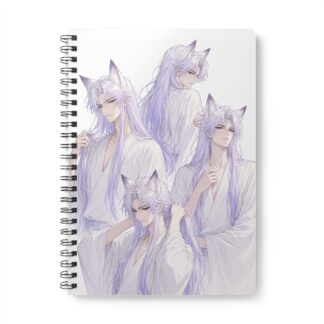
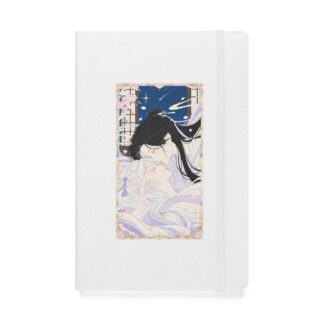
Bring the sect to your desk. If this article just diagnosed you, two things from our shelf will make the condition worse in the best way. The story printed on both of them has a shizun in it, too — the other kind: the one who framed the fox demon for his core. The A5 Spiral Notebook from The Silver Fox’s Tribulation is the everyday one: 150 pages of lined Austrian paper that lies flat when you need both hands for your tea, its cover printed with the four fox-eared cultivators in their pale robes. This is the notebook for the annotations, the reading notes, and the half-planned novel that’s definitely going to happen. For the gift version, the Hardcover Notebook is the one that looks like a gift even before it’s wrapped: UltraHyde cover, 80 cream pages, and a cover illustration of two long-haired men holding each other under a starry sky. One is for your own handwriting. The other is for someone you want reading the same stories you do.
FAQ
What’s the difference between shizun and laoshi?
Laoshi is the everyday Chinese word for any teacher. Shizun is a title of veneration for a cultivation master inside a sect — closer to “venerable master,” carrying ritual and hierarchical weight that “teacher” never does.
Is the shizun trope always forbidden romance?
Almost always — the transgression is the engine. Sometimes it’s the disciple’s feelings breaking sect rules, sometimes the shizun’s, sometimes both pretending the rules don’t apply to them. The forbiddenness is doing the narrative work either way.
Where can I read your shizun stories?
Master and Disciple is a Chinese radio drama in a fan-made English translation, voiced by a full cast — it’s linked from this article.
Is a shizun always the older one?
In form, always — the title implies seniority of rank and usually of years. In xianxia, though, centuries of cultivation age sit oddly on faces that look twenty-five, so “older” becomes a matter of rank and bearing rather than anything a birth certificate would settle.