
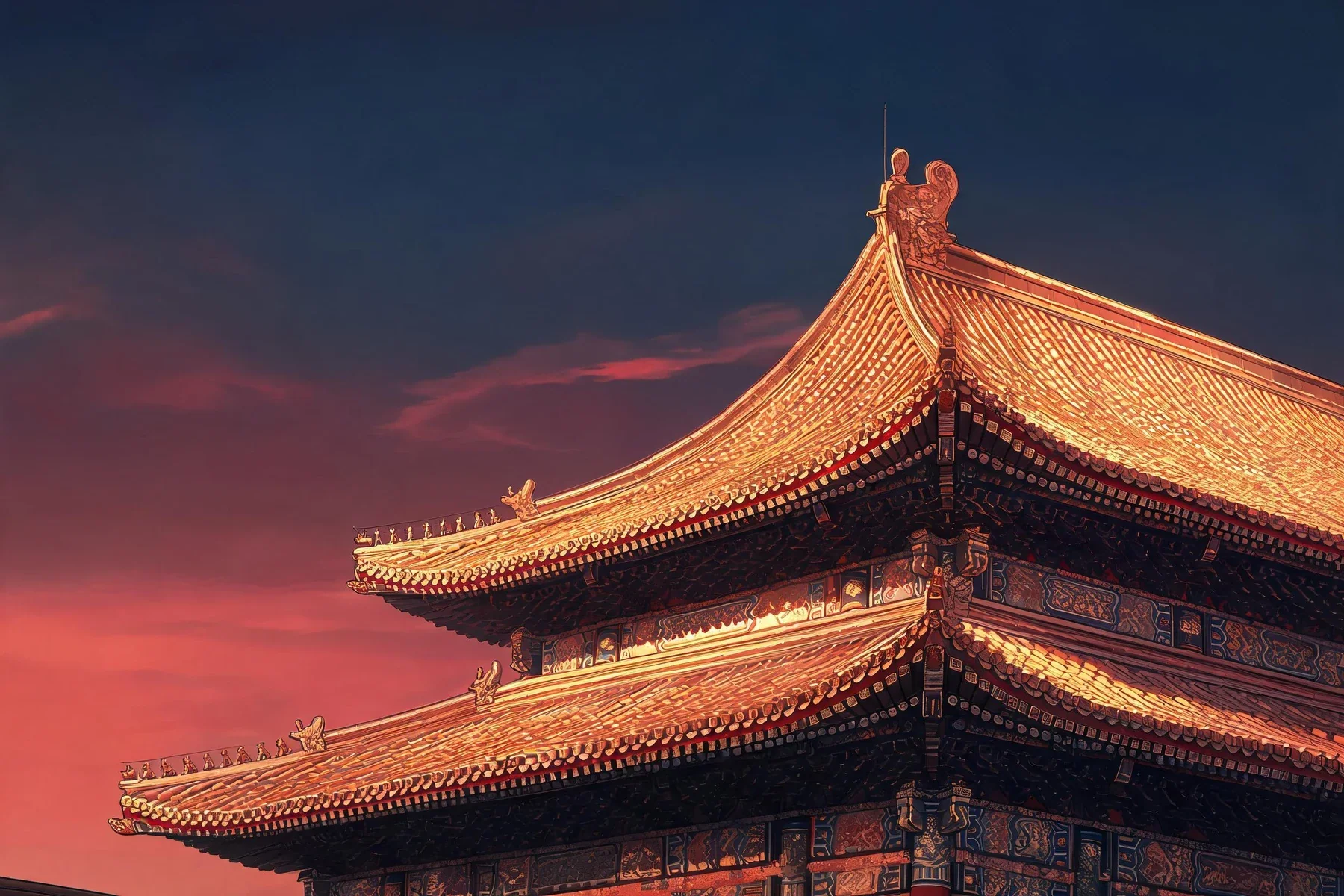
Read enough danmei and you start noticing that the worldbuilding is doing more work than the plot. The curved rooftops are not set dressing — a hall’s grade, its terrace, and the ornaments marching along its ridges announce rank before a character says a word. The robes are not costumes — a sleeve’s width, a sash’s color, and whether your hair is pinned up or left down all carry meaning. The stories on our creations site are written in this tradition, and the merch designed from them is too. This is a tour of the Chinese cultural details running through both — what they are, what they mean, and where to look for them.
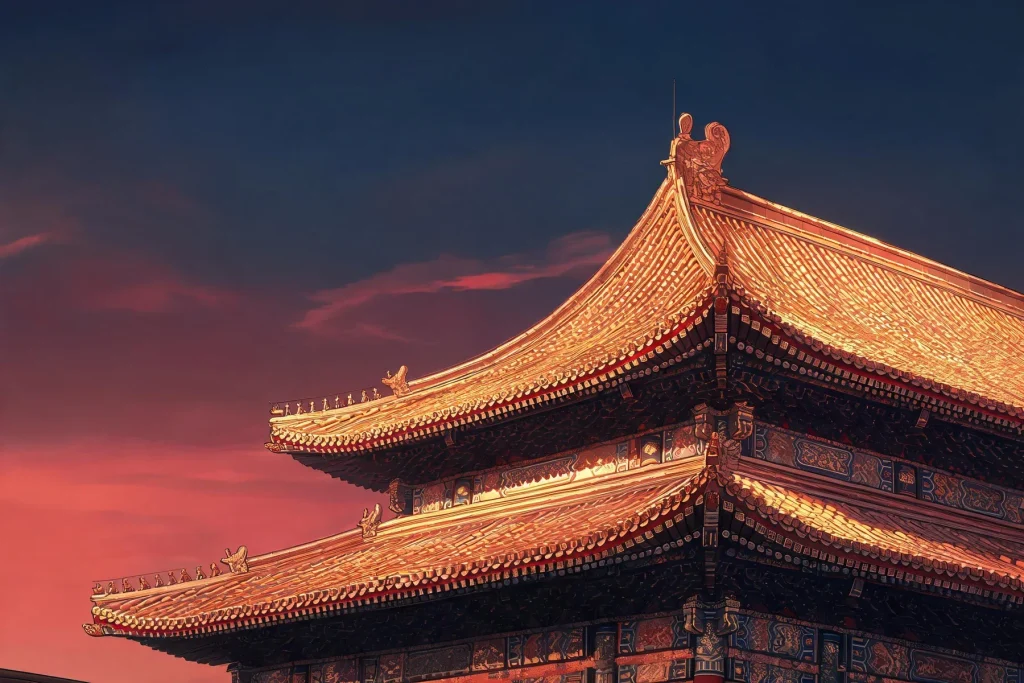
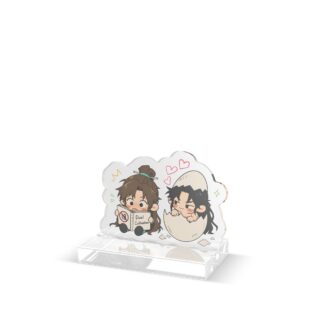
Architecture: the buildings speak first. Classical Chinese architecture runs on hierarchy, and the roof is the loudest part of it. The top grade — the double-eaved hip roof carried on a marble terrace, with the full line of ridge beasts watching from the eaves — belonged to the emperor alone. That is what makes the Ghost King’s palace in Ghost King such a quiet statement of intent: a ghost realm running its throne hall at imperial grade, down to the ridge beasts, is a king announcing he no longer answers to heaven’s hierarchy. The story’s leads keep having conversations in rooms whose architecture outranks everyone standing in them. The palace is in the text, free to read on the creation page — and the story’s merch starts with its most meme-able scene: two chibi cultivators and a deeply suspicious manual, custom-cut in cast acrylic for the desk.
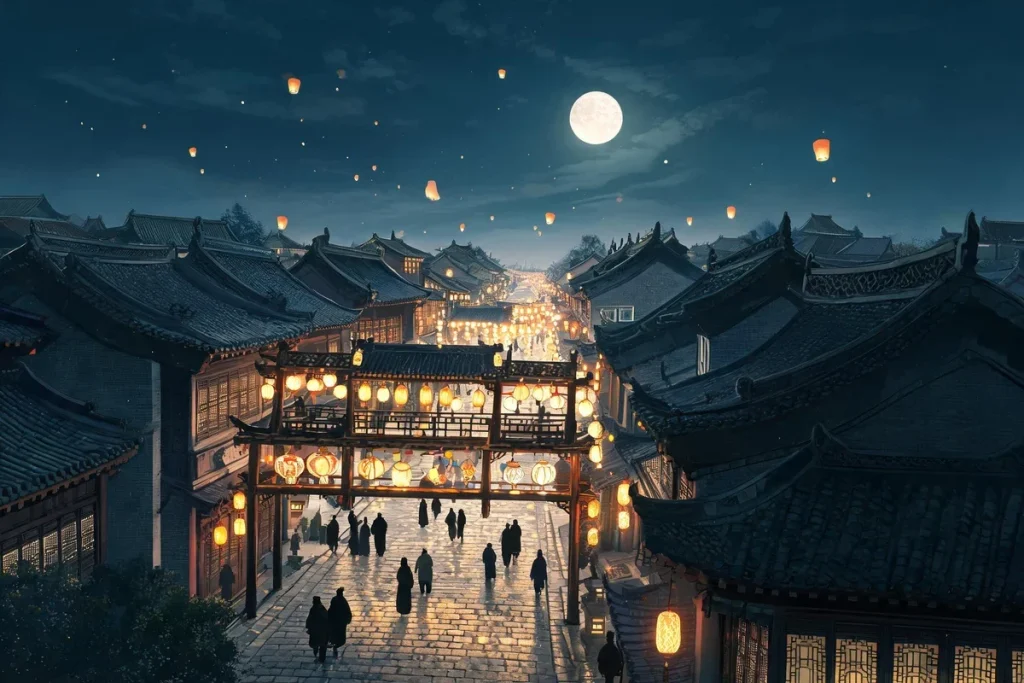
Festivals: the date is a plot device. The traditional festival calendar gives writers pre-built set pieces. The Lantern Festival, on the fifteenth night of the first lunar month, lights every city at once and was historically the one night young people could legitimately be out after dark — which is why so many danmei first meetings happen under lanterns. For a lot of Western readers the association was sealed by Heaven Official’s Blessing: its most famous scene, the lantern-festival meeting on Shenwu Street — one glance, and a hundred lifetimes of falling — happens on exactly this night. Mid-Autumn puts the full moon overhead while families are supposed to be together, making it the festival of absence. None of this needs to be explained in the text; the reader feels the date and knows what it promises.
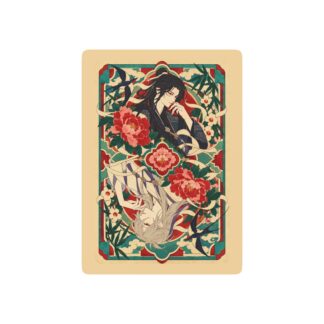
Florals: a vocabulary with fixed meanings. Look closely at traditional Chinese decorative arts — porcelain, embroidery, lacquer — and you find the same plants carrying the same meanings for centuries. The peony is wealth, rank, and unabashed beauty — the “king of flowers.” The plum blossom blooms in snow and stands for resilience and quiet integrity, the scholar’s flower. Bamboo bends without breaking: the gentleman. The orchid is the recluse, refinement that does not show off. The crabapple carries a specifically romantic charge — longing, devotion. Our Peony & Bamboo playing cards are built on exactly this code: a black-haired figure wreathed in peonies above, a white-haired fox-eared figure among plum and bamboo below, mirrored and bound by drifting ribbons. You can read the card like a poem if you know the language — that is the point of the language.
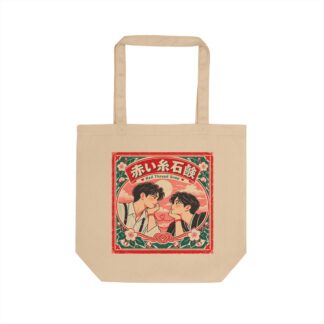
The red thread, and other symbols of fate. Some symbols cut across every category. The red thread of fate — the invisible cord said to tie destined lovers together, knotted at the ankle by the old man under the moon (yuelao) — shows up in stories, in festival customs, and in our shop: the Red Thread Soap tote takes its title and its red-cord artwork from the motif, two hands and a knotted string. It has company. Pairs of magpies announce joy and union. Mandarin ducks, who mate for life, stand for devotion that does not waver. The endless knot — a cord looped back on itself with no beginning and no end — means a bond that cannot be undone. Writers rarely invent new symbols for “these two belong together”; they reach for these, ready-made and centuries old. When a danmei story gives two characters a shared ornament, a matched pendant, a knot neither of them will untie, it is speaking this inherited language fluently.
Why our merch starts with stories. None of these details require a license. Roof eaves, festival dates, flower symbolism, the red thread — they belong to a shared cultural inheritance that any storyteller can draw on, and that inheritance is exactly where our pieces start. Each of our story-backed goods grows out of a danmei published on our creations site, written together with its writer: Ghost King builds its ghost world with this care at every level — the palace grade is only the most visible of it, with jade, ornaments, even beds matched to each character’s station. The Silver Fox’s Tribulation runs on xianxia cosmology and floral code. Our hanafuda-style sticker collection borrows the East Asian flower-card format to carry a four-season love story in four plants. Read the stories free on their pages, then come back — the merch makes considerably more sense once the vocabulary does.
FAQ
What do the flowers on the Peony & Bamboo cards mean?
Peony is wealth, rank, and beauty; plum blossom is resilience in hardship; bamboo is the gentleman who bends without breaking. The mirrored composition pairs the florals with the two figures — a coded portrait, not random decoration.
Is the red thread of fate a real Chinese belief?
Yes — the folklore of yuelao, the old man under the moon, tying destined lovers together by a red cord is centuries old and still common in modern romance writing, including danmei. Our Red Thread Soap tote riffs on the same motif.
Which of your stories use these details most heavily?
Ghost King builds its world with this care throughout — palace grade, jade, dress, furniture; The Silver Fox’s Tribulation leans on xianxia cosmology and traditional floral symbolism. Both are on our creations site, with free opening chapters.
Are the playing cards a traditional deck or a modern design?
A standard modern 54-card deck with custom face art — you can deal, shuffle, and play with it normally. The tradition lives in the imagery, not the rules.