

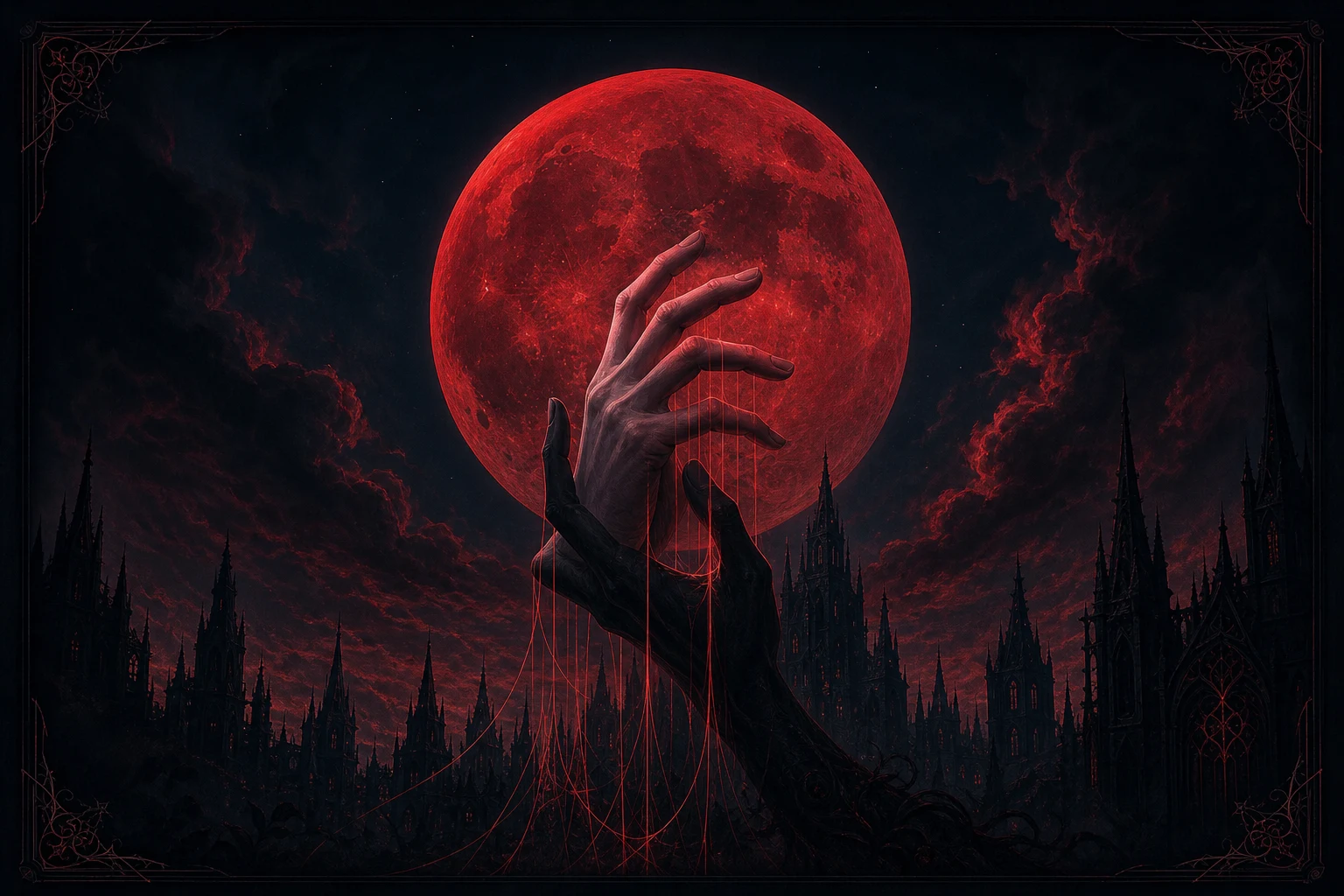
Somewhere in the long history of romantic storytelling, someone realized that the line between “I want to destroy you” and “I can’t stop thinking about you” is thinner than anyone admits — and danmei has been mining that vein ever since. Enemies to lovers is the trope where the person most dangerous to the protagonist becomes the person they trust most, and it works for reasons that have nothing to do with danger itself. Let’s talk about what those reasons are — and about a vampire in our catalog who demonstrates all of them in a single scene.
First, definitions, because the internet has blurred this one. Enemies to lovers is not “he was rude once.” It’s not rivals-with-benefits, and it’s not the slow fade of mild dislike. The trope requires two things: a real power difference or ideological opposition — hunter and hunted, sect and sect, throne and exile — and a genuine choice, made more than once, not to take the shot that would end it. The enemy part has to be true, or the lovers part means nothing.
Psychologically, the trope runs on three engines. The first is attention: nobody studies you like an enemy does. A love interest who has memorized your weaknesses has, by definition, memorized you — and being fully known is the thing romance is actually about. The second is earned trust: affection that arrives unearned feels like weather; trust that survives three attempts on each other’s lives feels like architecture. The third is the flip itself — the moment the danger turns, the reader gets to re-watch every earlier scene with new information, and the story doubles in size without adding a page.
Our catalog’s cleanest current example is Blood Moon Covenant. The setup is enemies-to-lovers reduced to its purest geometry: the Holy See’s youngest inquisitor, on a hunt, captured by a powerful vampire. Pale fingers close around his throat — and then simply don’t finish. Crimson eyes map his disheveled figure; a voice “deep as the abyss” delivers the thesis statement of the entire trope: “A pure cleric… what perfect prey.” Every engine from the previous paragraph is running. Full attention: the vampire has studied him precisely. Real stakes: the hand on his throat is a choice being made repeatedly. And the flip — the story tags itself dark fantasy and forbidden, which means the turn, when it comes, will recontextualize everything, including the word prey.
Within danmei, the trope forks into recognizable flavors, and it helps to know which one you’re craving. Hunter-and-prey, like the covenant above, runs on danger and power imbalance. Rivals-to-lovers swaps violence for competition — two peak cultivators, two idol trainees, one ranking board between them. Enemies-by-duty is the gentlest fork: sworn opponents who like each other immediately and are appalled about it. Whatever the flavor, the quality test is the same: skip ahead to the moment the shot isn’t taken. If that moment costs the character something visible, keep reading. If it’s free, the story is renting the trope instead of owning it.
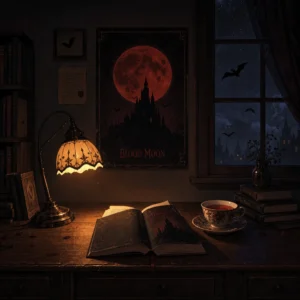
If this trope is your home address, your walls should know. Our red moon poster is the rare piece of art that reads differently depending on which stage of an enemies-to-lovers story you’re in — menace first, devotion later, and no text on the print to lock in the wrong one. Above a desk, it does what the trope does: it keeps the danger visible so the warmth means something.
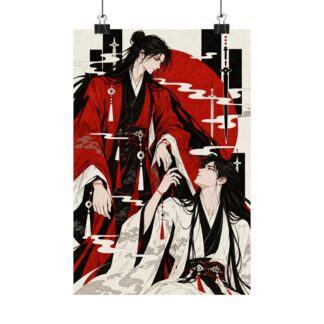
Start with Blood Moon Covenant — the throat-grab scene is in the introduction, which is either generous or cruel depending on your tolerance for cliffhangers. And if you finish it and need to talk about the word “prey,” our comments section has never once stopped anyone.
FAQ
Q: What is enemies to lovers in danmei?
It’s the romance arc where two characters start on opposite sides of a real conflict — ideological, professional, or predatory — and reach love through repeated choices not to destroy each other. The opposition must be genuine; the falling is the plot.
Q: Why is enemies to lovers so popular?
Three reasons: enemies pay complete attention to each other, trust built across conflict is sturdier than affection given freely, and the reversal lets readers re-read every earlier scene as double-meaning. The trope literally makes the story twice as rewarding.
Q: Is Blood Moon Covenant enemies to lovers?
The introduction sets it up exactly that way — a vampire who has captured his inquisitor prey and chooses, so far, not to close his hand. Whether it delivers the full turn is what “Updating” means. Chapter 2 is titled “The Abyss of Falling,” which is not subtle and is not trying to be.
Q: What’s the difference between enemies to lovers and rivals to lovers?
Violence versus competition. Enemies want to neutralize each other; rivals want to outrank each other. Rivals can share a meal. Enemies are calculating whether the meal is poisoned — and the calculation is the romance.
Q: Where should a beginner start with this trope?
With a story where the conflict is personal, not political — two people, one charged scene, nothing to memorize. A vampire’s hand around a cleric’s throat is the whole syllabus.