

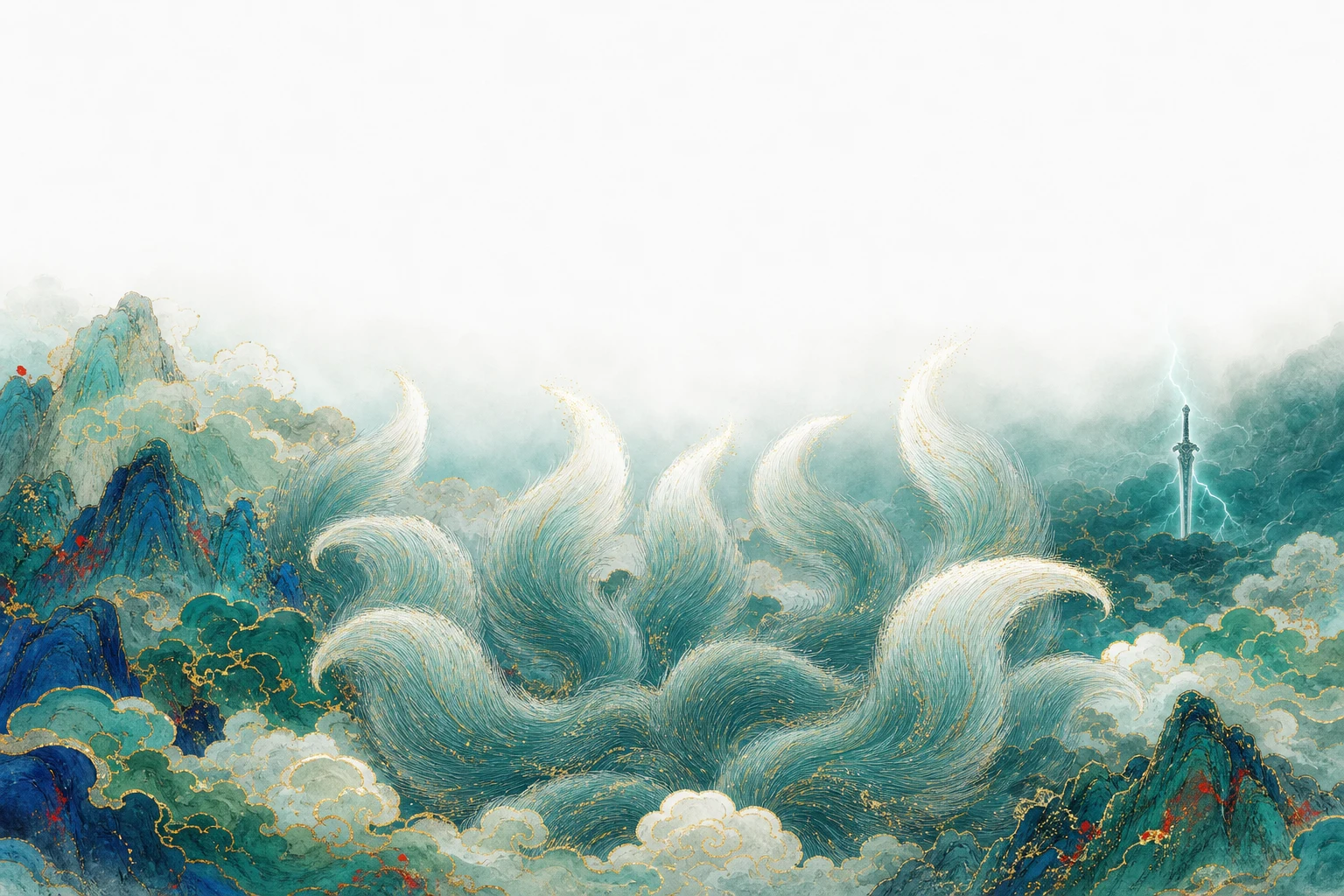
Liu Qingxian wakes in pain, and the pain is informative: he now knows, with complete certainty, that his world is a xianxia novel. He is the nine-tailed fox demon of the demon realm — the story’s doomed villain — and his script is already running. Tonight is the night he poisons the tea of Xie Wuchen, the protagonist. The frame-ups come next. And the ending is written in a sword: Xie Wuchen will cut him down personally, and his soul will be refined into the blade. That is where the official summary stops — at the poisoned tea, with the plot loaded and the clock running. The fox’s question is the only question this story cares about: what does a man do with the chapters in between, once he knows exactly how the book ends?
Why the villain’s seat is the best one. Transmigration-into-a-book stories usually hand the reader a bystander — someone unimportant, watching the plot go by. The Silver Fox’s Tribulation hands you the contractually doomed antagonist, and the mathematics of that seat is delicious. The fox has power (nine tails, centuries of cultivation), information (he knows every beat of the plot), and zero security (the plot wants him dead on schedule). Every advantage he holds is real; every advantage is also bait. Watching him decide which knowledge to use, which to weaponize, and which to sit on like a grenade is the story’s entire engine. He is not trying to win the story. He is trying to lose it more slowly, on his own terms, in ways the book did not pre-authorize.
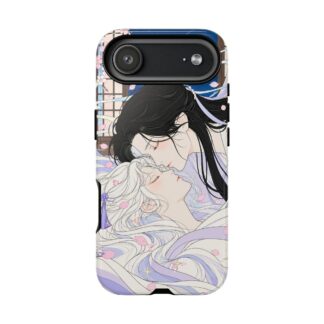
The other half of the chessboard. Xie Wuchen, for his part, is exactly what a xianxia protagonist should be: righteous, gifted, and destined for ascension — which is precisely what makes him terrifying from the fox’s side of the board. The novel says these two are fated to be executioner and executed. The fox, having read the ending, keeps finding reasons to be somewhere else when the plot comes collecting. How that distance gets spent is the part we won’t spoil — the official summary stops before it. But the merch department was given the same summary, and their answers are telling: the hardcover notebook‘s cover is a small, gold-framed painting of two long-haired figures embracing beneath a starry sky, petals falling; the phone case leans two figures forehead to forehead in lavender light, eyes closed; the playing cards bind them in one mirrored composition, drifting ribbons and all. The product pages call the pairing “two lovers.” The official summary only hands us a poisoner and his target. The art has already voted.
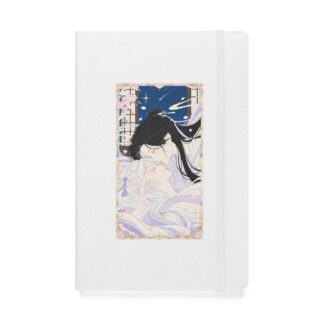
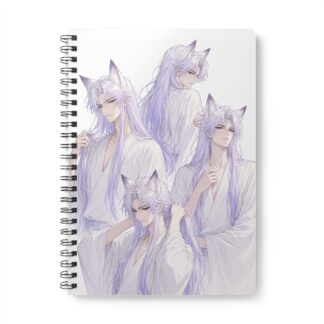
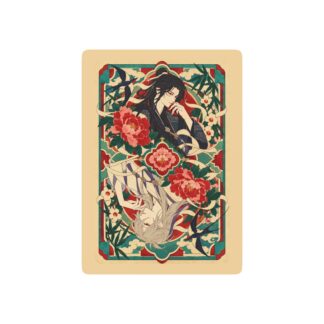
The shelf, card by card. The hardcover notebook is the gift-shaped one — an UltraHyde cover, eighty pages of cream paper, and that small vertical painting of the two of them under the stars, bordered in gold. The playing cards are the deck that treats the whole relationship as one image: every card face carries the same mirrored composition — the black-haired figure above with a hand to his lips, the white fox-eared figure below, upside down, ringed in white plum — peonies, plum and bamboo doing the traditional floral code, the card backs an ornate scrolled spade. The phone case is the most candid object on the shelf: two figures nearly touching under falling petals, and it survives drops doing it — a polycarbonate shell over a TPU liner, full-wrap print. And the A5 spiral notebook is the daily workhorse and this shelf’s entry point: a hundred and fifty lined pages on 90gsm paper that lie flat, its cover a light, airy group portrait of four fox-eared cultivators in pale robes — the fox himself, in multiple moods, up front. If the hardcover is for the shelf, the A5 is for the semester: the notebook you actually finish, which is its own kind of devotion.
Where to read. The story lives on our creations site, published there together with its writer — free to start, the first chapters open, and the official summary, the poisoned tea, the fated sword, is all right there on the page. Fair warning: knowing the ending of the book and knowing the ending of this book are two different things. The fox is counting on that gap. So are we.
The candid one. The phone case pulls two figures closest — forehead to forehead, eyes closed, petals falling — and then makes the confession practical: a polycarbonate shell over a TPU liner, full-wrap print, built to survive being dropped while you are rereading the fox’s first chapter on your lunch break.
FAQ
Q: Is The Silver Fox’s Tribulation a transmigration story?
Yes, with a twist: the one who knows the world is a novel is the villain. Liu Qingxian wakes knowing his whole scripted arc — the poisoned tea tonight, the frame-ups, the executioner’s sword — and the story is what he does with that foreknowledge.
Q: Who is Xie Wuchen?
The novel’s protagonist — righteous, gifted, destined for great things, and fated, according to the original plot, to cut the fox down and refine his soul into a sword. Everything else about him, the story past the summary gets to argue with.
Q: Are the two people on the merch the two leads?
The product pages don’t name them, and we won’t either. What we can say: the official summary hands us a poisoner and his fated target, and the covers already show them embracing, forehead to forehead, and bound in one mirrored card face. The art says what the summary hasn’t yet.
Q: Which merch shows the two together?
Three, in rising intimacy: the playing cards bind them in one mirrored composition; the hardcover notebook shows them embracing under stars; the phone case brings them forehead to forehead. The A5 notebook is a solo act: four fox-eared cultivators, no pairing.
Q: Do I need to know xianxia to enjoy it?
No — the emotional engine (a man arguing with his own fate) runs on zero genre knowledge. But if golden cores and tribulations intrigue you, our beginner’s guide to xianxia is ten minutes well spent.