


Xianxia (xiānxiá, “immortal heroes”) is Chinese fantasy built around cultivation: mortals draw spiritual energy from the world, refine it inside the body, and climb a ladder of realms toward immortality. And if you read danmei, you already know this genre better than you think — the tag that says “cultivation” is xianxia, the sect with all the oaths is xianxia, the thousand-year waiting room is xianxia. This guide is written for you: the fantasy framework behind half the danmei you love, explained once, by someone who loves it too. The stage is a mythologized ancient China where Daoist inner alchemy simply works — meridians opened by will, golden cores ripened like harvests, heavenly tribulations that arrive on schedule — and gods, demons, and fox spirits share the map with humans. If wuxia is martial arts with its feet on the ground, xianxia is where the ground gives way: swords fly, seas part, and the endpoint is leaving mortality itself. This is the genre that handed danmei its oath-bound sects, its most devastating time skips, and its most elegant excuse for two people to be shut in a cave together “cultivating.”
The ladder, once. Every xianxia story runs on the same skeleton, and once you have it, every translation clicks into place. A cultivator starts by sensing qi and opening the meridians — the body’s internal channels. Then the realms stack up, and their names are the genre’s background music: Qi Refining, Foundation Establishment, Golden Core, Nascent Soul, Spirit Transformation, and at the far end, Ascension. (English translations argue about the middle rungs — you will meet Golden Core as Core Formation and Nascent Soul as Primeval Infant — but the shape never changes: a small person getting cosmically less small.) Each breakthrough invites a heavenly tribulation, because in xianxia the sky grades your homework — lightning first, questions later. Climb high enough and the ladder ends the only way it can: ascension, a one-way exit from the mortal realm, the one promotion you cannot refuse. You do not need to memorize the rungs to love a story. You need two things: progress is measured in decades, and the heavens keep receipts.

The furniture: what you meet on page one. Xianxia has a shared prop department, and recognizing it is half the fun. A spiritual root decides how fast you absorb qi — and the protagonist’s root is always, always better than their sect knows. Secret realms open on schedules no one controls, swallow twenty disciples at a time, and give them back changed. Jade slips hold techniques, storage rings hold everything else, and auction houses hold the plot. There is always a forbidden area on the map, and there is always someone walking into it against advice. None of this is decoration. Every prop is a machine for sorting the people who trust each other from the people who merely travel together — which is, not coincidentally, exactly what a romance needs.
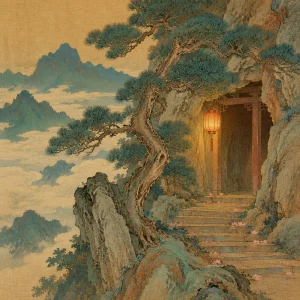
Xianxia vs. wuxia vs. xuanhuan: the quick version. The three Chinese fantasy labels get mixed up constantly, and the differences are worth knowing — they tell you the power ceiling before you read the first chapter.
| Wuxia | Xianxia | Xuanhuan | |
|---|---|---|---|
| Power source | Martial arts, inner force | Daoist cultivation, qi | Invented systems — magic, levels, anything |
| Setting | Historical or semi-historical China | Mythological ancient China, cosmic scale | Fictional secondary world |
| Power ceiling | Peak human — a sword can still kill you | Immortality and beyond | Whatever the author invents |
| Typical stakes | Jianghu honor, revenge, loyalty | Transcendence, sects, tribulations | Varies wildly by system |
Wuxia keeps its feet on the ground; xianxia points at the sky; xuanhuan ignores both and builds its own physics. Most danmei you’ll meet tagged “cultivation” is xianxia — and the genre’s biggest romance engines, the shizun dynamic and dual cultivation, only exist because the power system is built exactly like this.
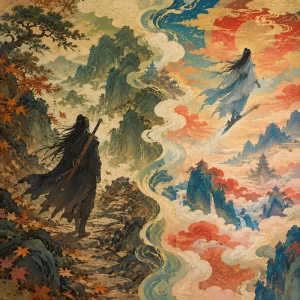
Why danmei loves this genre specifically. Xianxia isn’t just a setting for danmei — it’s a factory for the exact dynamics danmei readers are chasing. Lifespans measured in centuries turn every relationship into a question of time: who waits, who ascends first, who stops aging while the other keeps counting. Sects stack hierarchy and oaths on top of each other, which is how you get the shizun dynamic — master and disciple, duty and devotion, the whole forbidden architecture. Dual cultivation makes intimacy a literal part of the power system, so closeness is never a side quest; it’s progression. And because everyone in the story is chasing transcendence, the genre can raise the stakes from “will they ever say it” to “will either of them survive the next tribulation” without ever breaking tone. It is the only genre where “I would wait a thousand years for you” is a literal, checkable plot point. If you came in through Mo Dao Zu Shi or Heaven Official’s Blessing — and most of us did — you have already read xianxia. This is just the field guide to what you felt.
How to pick your first one. Here is the genre’s open secret: the length is the point. Xianxia stories run long on purpose, because their core fantasy is time itself — a century of separation that matters, a sect that outlives its founders, a grudge that takes three generations to ripen. You cannot tell that story in ninety chapters. So the practical advice is not “find a short one”; it is start with a finished one. A completed xianxia romance hands you the entire arc in one piece — every tribulation answered, every oath paid off, no cliff standing between you and the ending. After that, let an updating one sink its hooks in. The week-long wait between chapters is its own shared ritual; half of this fandom’s life is the reading, and the other half is the waiting together. And when the last page lands and someone finally ascends — that moment is why the genre runs long. Nobody remembers the short version of that feeling.

Like this world? One lives on our shelf. The story we keep for this exact mood is The Silver Fox’s Tribulation — xianxia doing what xianxia does best, with the romance turned up, published together with its writer on our creations site. A nine-tailed fox spirit wakes in pain to a horrifying realization: his world is a xianxia novel, and he is its doomed villain — fated to poison the hero’s tea tonight and die by his sword in the end, soul refined into the blade. He knows exactly how stories punish people like him. He scrambles anyway. It’s the whole genre in one body — sects, tribulations, fate, and one ancient creature trying to out-write his own ending — and it’s free to start. If you’ve never read xianxia, this is a good first door.
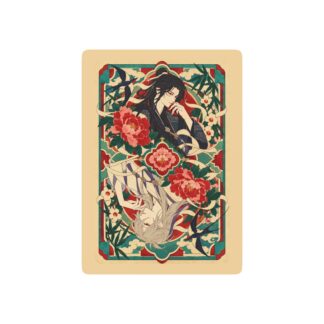
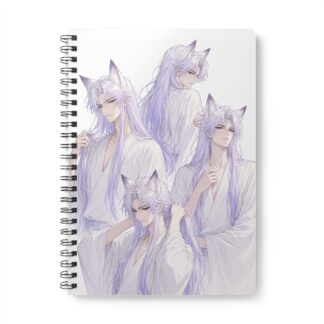
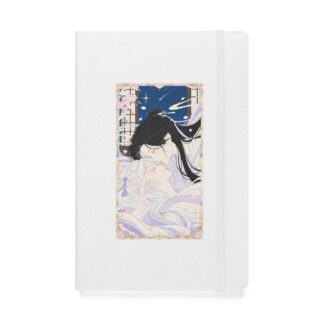
For the one who runs the game night. Our Silver Fox series turns the whole genre into objects you can keep. The Peony & Bamboo Playing Cards are the ones that stop the table: a full standard deck, but every card face carries the same mirrored illustration — one lover above in deep blue, the fox-eared one hanging upside-down below, peonies and bamboo tying them together — in crimson, jade, and ivory. Game night stops being about the game within about four minutes. The A5 Spiral Notebook is for the annotator: 150 lined pages that lie flat, fox-eared cultivators on the cover, built for the notes a cultivation novel will absolutely demand of you. The Hardcover Notebook is the one you give — 80 cream pages under a starry embrace. And the Protective Phone Case puts the nose-to-nose moment in your palm, dual-layer shell and all. One of these survives being dropped. Your heart is not guaranteed.
FAQ
What’s the difference between xianxia and wuxia?
Wuxia is grounded martial-arts fiction — inner force, jianghu, peak-human fighters. Xianxia is cultivation fantasy — qi, golden cores, tribulations, and immortals. Wuxia stays on the ground; xianxia leaves it.
Do I need to know the cultivation realms to read xianxia?
No. The ladder matters, but the story teaches it to you by repetition — the names come back until they stick. You need two ideas: progress takes decades, and the heavens are watching. Everything else is flavor you’ll absorb by chapter thirty.
Are xianxia novels really that long?
Yes — and on purpose. The danmei corner of the genre counts its big names in the hundreds of chapters, because time is the genre’s whole subject: centuries-long separations, sects that outlive their founders, grudges that take generations. Start with a finished story and the length works for you: the whole arc, no cliffhangers between you and the ending.
Where does danmei fit into xianxia?
Xianxia is a setting, not a romance mode — it hosts straight, BL, and non-romance stories alike. The genre’s power systems just happen to manufacture the dynamics danmei loves: hierarchy, oaths, forbidden intimacy, and thousand-year waits.
[…] full cast, post-produced, a fan labor of love. If the vocabulary of this world is still new, our xianxia beginner’s guide covers the sects, the golden cores, and the tribulations underneath all of it. The sect accepts all […]
[…] with his own fate) runs on zero genre knowledge. But if golden cores and tribulations intrigue you, our beginner’s guide to xianxia is ten minutes well […]