
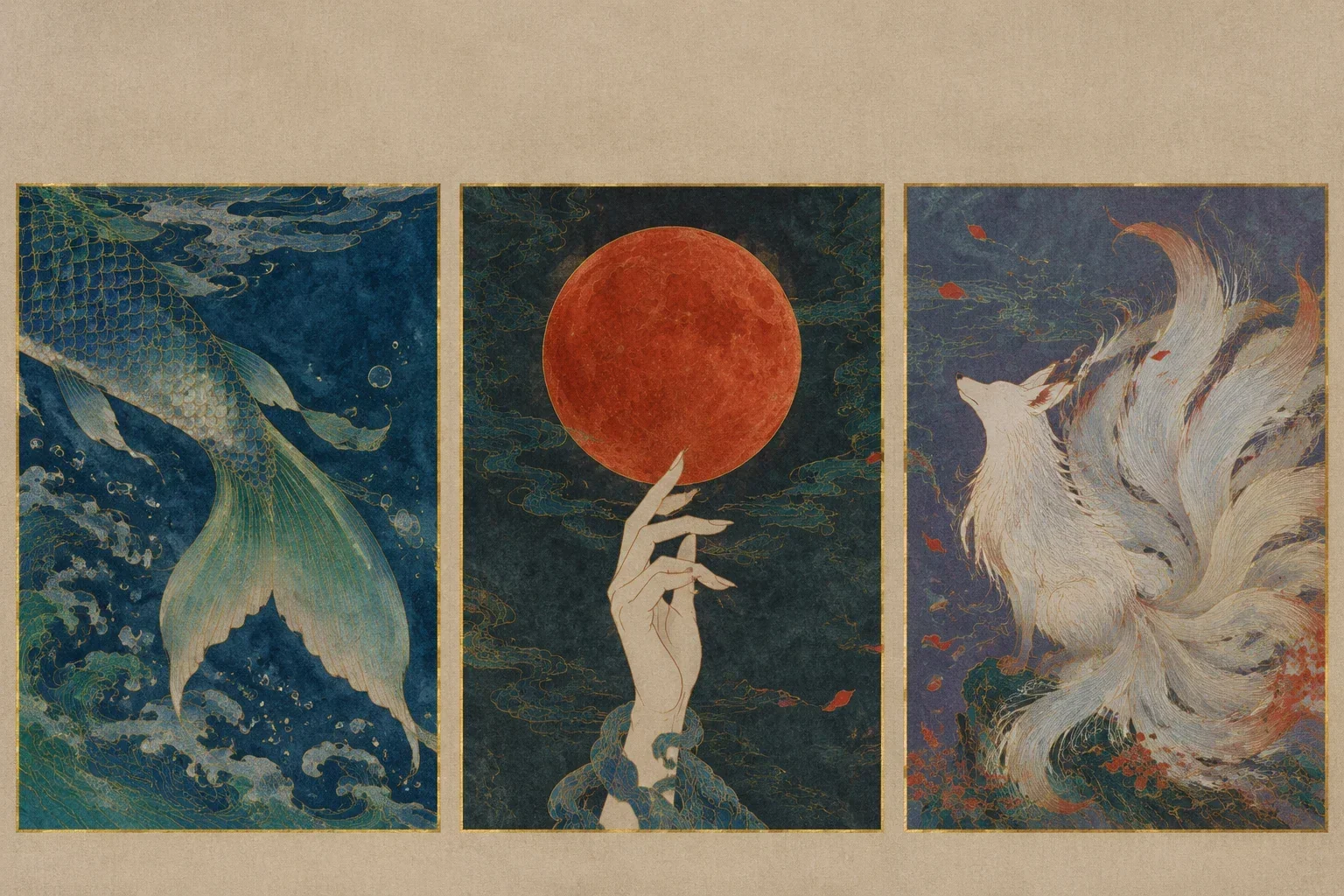
Every danmei reader has one: the novel where the love interest is not human. Not figuratively — literally. Merfolk who show teeth before affection, vampires who stop an inch from your throat, nine-tailed foxes old enough to see the plot coming. Chinese fandom files the whole category under a borrowed Japanese word, jingai — in Chinese, renwai, “outside human” — and the borrowing is the point: danmei raids two folklores at once. Greek sirens and Chinese jiaoren. European vampires and Tushan fox spirits. Same obsession, two traditions, and every story ends up asking the same question — how much of him is nature, and how much is choice? Here is where each creature comes from, and how our shelf answers the question three different ways.
The merman: two seas, two temperaments. The West got the merman from the Greek siren — half bird in the oldest accounts, refitted with a fish tail in the Middle Ages — whose entire job was singing sailors onto the rocks; Andersen’s Little Mermaid added sacrifice, and the modern merman inherited both the appetite and the tragedy. China’s jiaoren took a different road. The half-human, half-fish figures of the Classic of Mountains and Seas were still monsters to be catalogued; by the Jin dynasty, the Soushen Ji had made them weavers whose tears condense into pearls — grateful guests who repay a kindness with a basin full of them — and the gauze they weave, jiaoxiao, light as smoke and unwettable, became the handkerchief Chinese poetry cried into for a thousand years. The Western sea sings you to death; the Eastern sea weeps pearls and pays its debts. Temptation on one side, gratitude on the other — that is the fork every danmei merman walks.
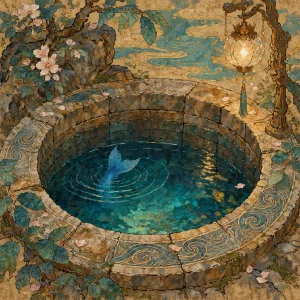
Our shelf holds both temperaments. The Merman Prince in My Estate plays the Western one straight: Lord Vale signs what he believes is a companion contract and spends months earning the trust of the blue-tailed merman in his moonwell, who answers every touch with bared teeth. Then the message crystal lights up: the guild sent the wrong merman. This one’s contract has no consent clause for intimate contact, and if his boundaries are crossed, his Alpha instincts may destabilize. Vale turns to leave. The tail wraps around his waist and drags him back. Everything after is a negotiation with something that could end the conversation — and neither of them walks away from the table. The Eastern sea gets two: Song of the Sea Dragon, where a Great Jing prince keeps a captive merman named Lingxi in a secret water cell — silks, pearls, everything but freedom — while the sea calls its lost child home; and Black Tides of the Sapphire Deep, which builds the underwater court outright: a nameless merman who forages pearls finds a wounded black-scaled stranger, and the stranger turns out to be the newly crowned sovereign of the Black-Scale Abyssal Court, come back to claim his destined mate. And if you want the trope at mainland scale, Renyu Xianluo — Lin Qian’s ABO blockbuster, a white-lion agent and the merman prince who was his whole childhood — is the fandom’s loudest argument that the fish man wins.
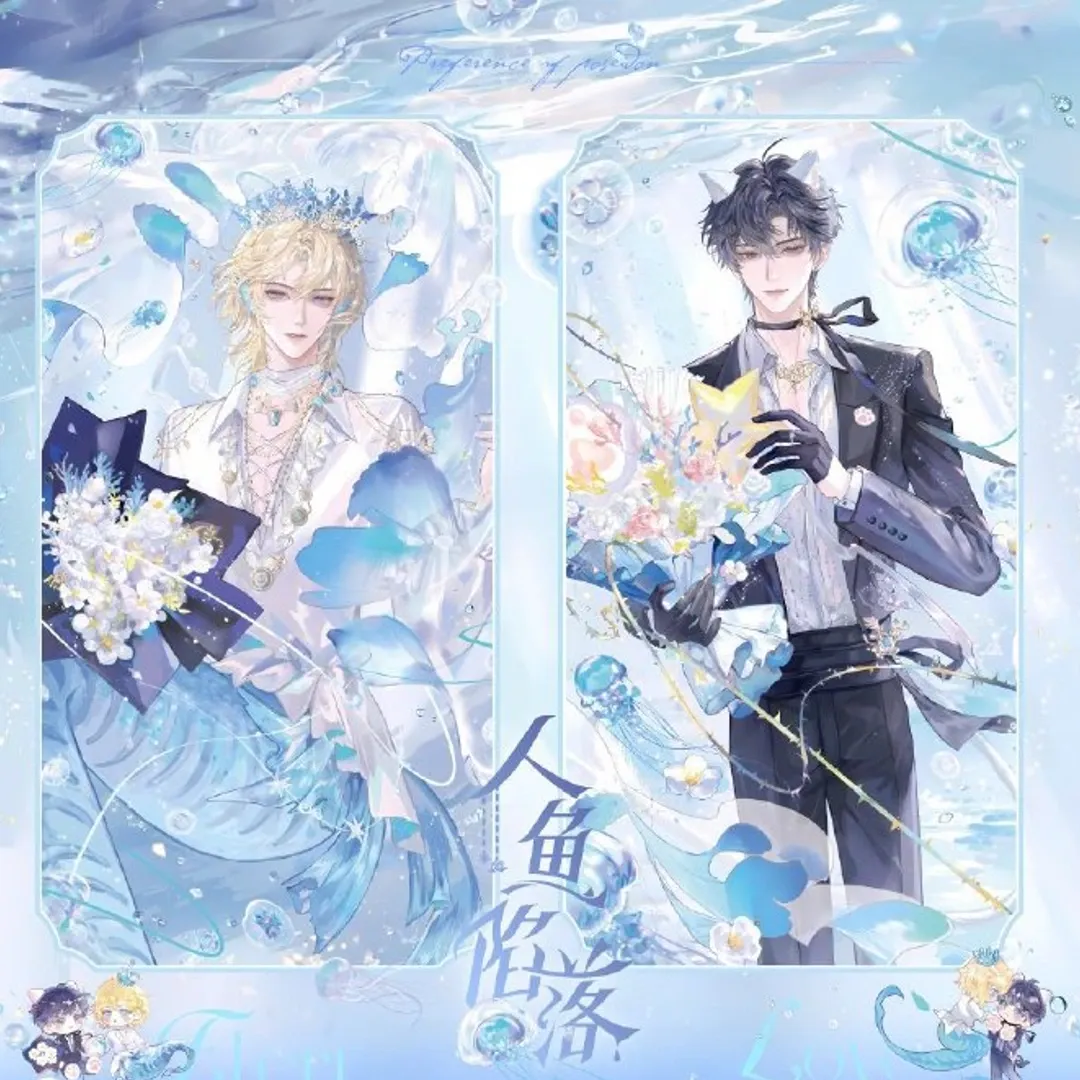
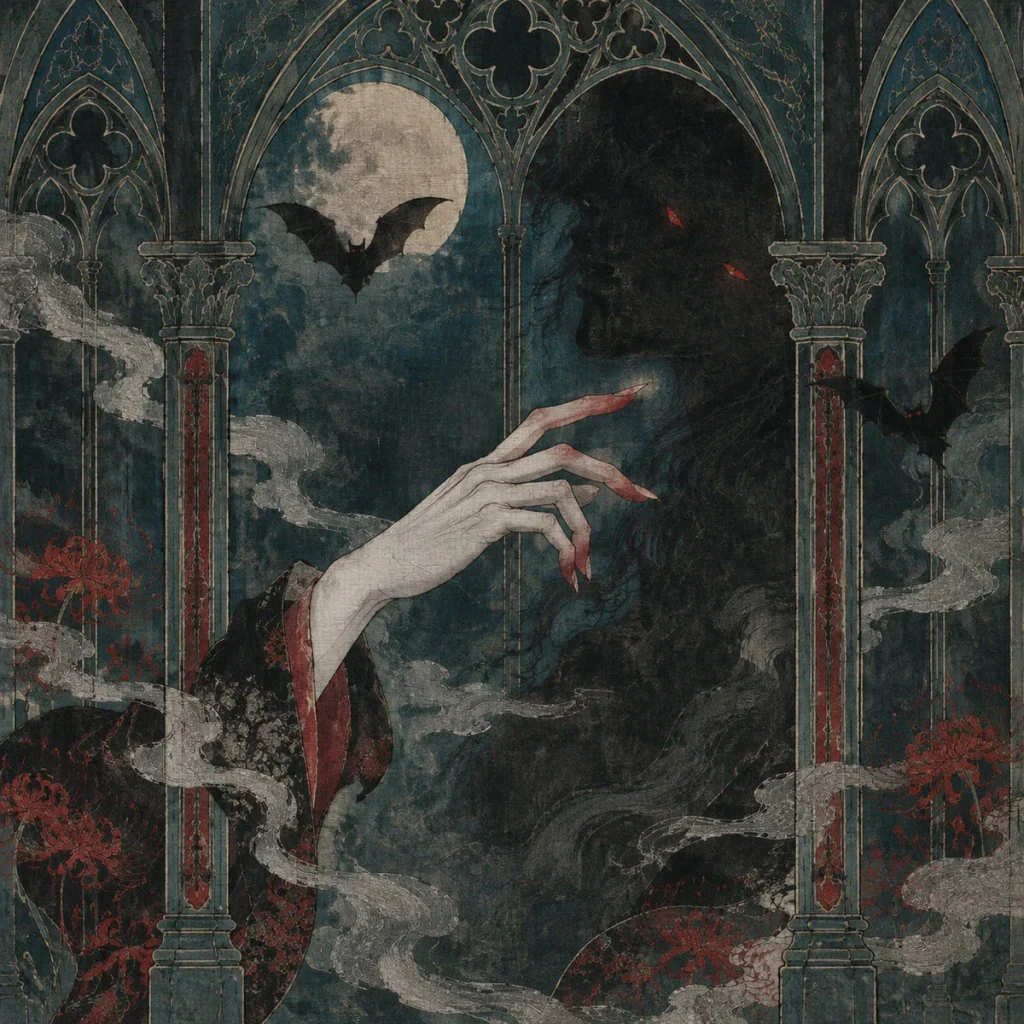
The vampire: the oldest predator in the room. Vampires came out of European folklore — revenants, plague years, the aristocratic repackaging of the nineteenth century — and horror spent a century making them scary. BL made them do something harder: it made restraint the point. Every bite is appetite and consent in the same act, with the throat as the stage, and the genre never runs out of ways to stage a bite that does not happen. Blood Moon Covenant compresses the whole trope into one image: the youngest Inquisitor of the Holy See, captured mid-pursuit, a powerful vampire’s pale fingers closing around his throat — and stopping. Crimson eyes study the disheveled cleric; a voice deep as the abyss pronounces him “a pure cleric… what perfect prey.” The run is still early, which means the restraint has a long way left to travel. And the night is international now: Japan has been drawing vampire romances since Moto Hagio’s Poe no Ichizoku and keeps a dedicated BL branch (Vassalord is the cult favorite); Thai BL got its vampire wave in 2025 with Revamp: The Undead Story and My Golden Blood back to back; Korea made the vampire a dystopian bureaucrat in Blood Bank on Lezhin; Western BL short dramas have lately been letting him off the leash again. And Chinese danmei keeps a steady bloodline of its own under its vampire tags. Nobody owns this monster. Every culture just keeps asking it to wait.
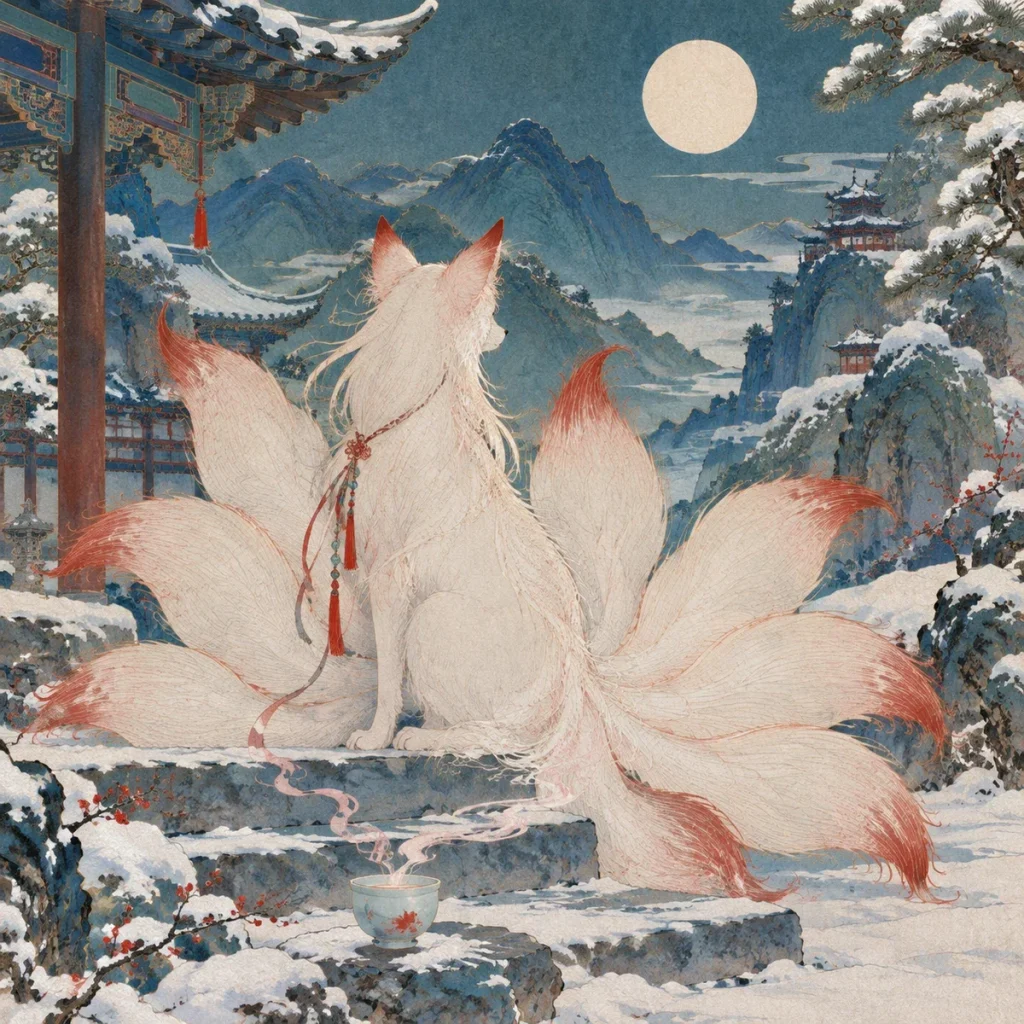
The fox spirit: the monster China kept rewriting for three thousand years. The nine-tailed fox enters Chinese writing in the Classic of Mountains and Seas as a man-eating omen-beast of Mount Qingqiu — voice like an infant’s cry, and eat its flesh, the text promises, and enchantment stops working on you. The tradition then spent millennia arguing with that first draft. The Lüshi Chunqiu records Yu the Great marrying a woman of the Tushan clan, heralded by a white nine-tailed fox; their son Qi founded the Xia dynasty, which quietly turned the nine tails into a wedding auspice and the fox into Chinese myth’s first matchmaker. The Xuanzhong Ji gave foxes a career ladder — fifty years of cultivation to wear a woman’s shape, a hundred to wear beauty, a thousand to become a tianhu, a heaven-fox in direct correspondence with the sky. Web novels later organized the relatives into four great clans — Tushan, Qingqiu, Yousu (Daji’s clan), Chunhu — a taxonomy fans now treat as canon. And folk religion ran its own parallel track: in China’s northeast, the shamanic Five Household Immortals seat the fox at the head of the table above the weasel, the hedgehog, the snake, and the rat, and Tiecha Mountain in Liaoning remains the seat of the Black Mother, matriarch of the northeast fox cult. Even our Ghost King, the ghost-raising rom-com on our shelf, keeps one on staff: the steward of the Wanbao Pavilion is a fox spirit straight out of that Tiecha Mountain tradition. Our shelf’s fox story, The Silver Fox’s Tribulation, hands the plot to the fox himself: a nine-tailed fox wakes in pain with a horrifying realization. His world is a xianxia novel, and he is its doomed villain — fated to poison the protagonist’s tea tonight, die by his sword in the end, and spend eternity refined inside the blade. He has lived long enough to know exactly how stories punish people like him. That is the fox-spirit variant of the trope in one line: not an animal learning to be human, but an ancient being trying to out-write his own fate.
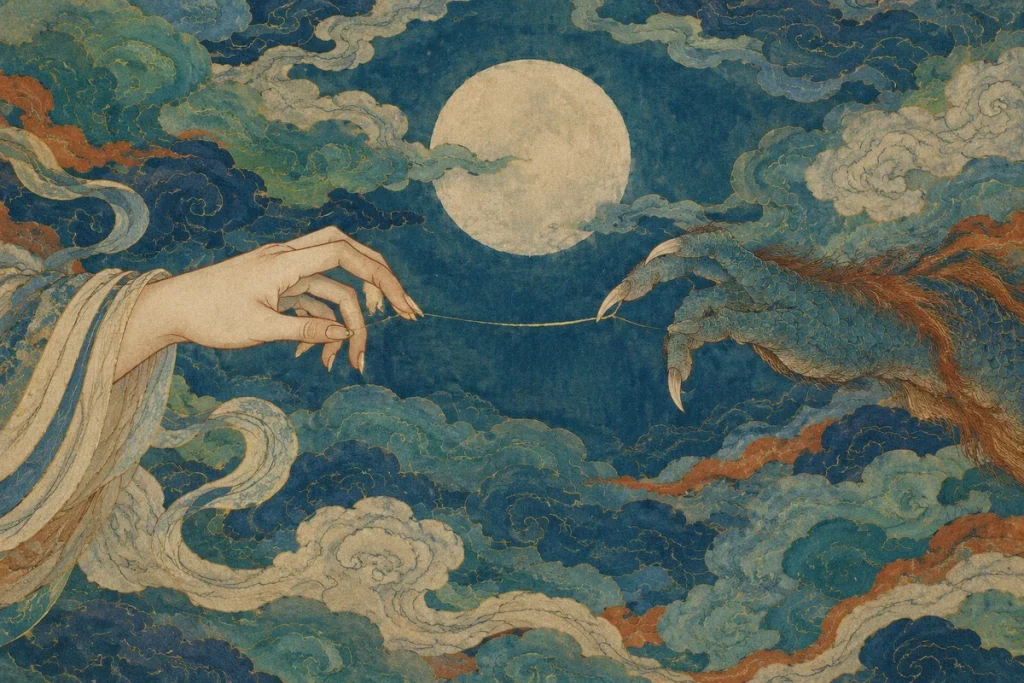
Why the trope never runs out. Look at what each tradition contributes. The Western creatures arrive carrying appetite — the siren’s song, the vampire’s thirst — so their stories are about restraint: hold it, hold it, one inch closer. The Eastern creatures arrive carrying time — the jiaoren’s patient weaving, the fox’s millennia of cultivation — so their stories are about knowledge: he has seen how this goes, and he is telling you with his eyes. Power gap, dangerous nature, the nature-versus-choice question — all of it runs through both shelves, and every combination produces a different romance. That is why the non-human lead is not a trend but a permanent fixture of the genre, and why our shelf keeps both seas and all three thousand years of the fox on call. Our takes live on the creations site, free to start — and each one argues, in its own register, that the monster was never the dangerous part. The dangerous part is what the human decides to do next.
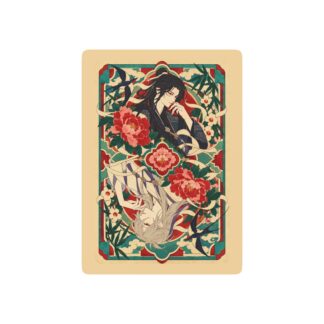
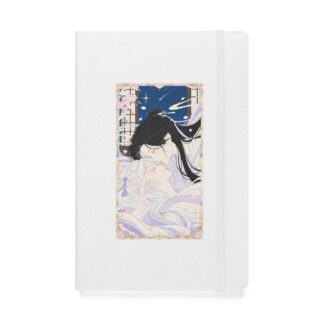
The trope, printed. Of our non-human leads, the fox has the deepest merch run on the shelf, and the Peony & Bamboo Playing Cards are its centerpiece: a standard 54-card deck whose faces all carry one mirrored illustration — the dark-haired lover upright above, the white-haired fox-eared lover hanging upside-down below — with peonies, bamboo, and ribbons in crimson, jade, and ivory doing the work of tying them together. A whole non-human romance, dealt out in a single hand of poker. If the cards move too fast for you, the Hardcover Notebook holds the same two lovers under a starry sky across 80 cream pages — the slow version. Both belong to The Silver Fox’s Tribulation, free to start and still updating, in case you want to meet the fox before you deal him.
FAQ
What counts as a non-human lead in danmei?
Any love interest who is literally not human — merfolk, vampires, fox spirits, dragons, demons, gods. Chinese fandom borrows the Japanese word jingai (in Chinese, renwai, “outside human”) for the whole category; English has no single term, so “non-human leads” is your search word. The species list is not the point — what matters is what non-humanity does to a romance: a built-in power gap, a dangerous nature, and the nature-versus-choice question.
Is the merman an Eastern or Western trope?
Both, and the two seas disagree. The Western line runs from the Greek sirens — bird-women first, fish-tailed later, fatal singers — through Andersen’s Little Mermaid: temptation, sacrifice, tragedy. The Chinese jiaoren of the Classic of Mountains and Seas became, by the Jin dynasty, weavers whose tears turn to pearls and who repay kindness with a basin of them: gratitude, craft, poetry. Danmei writes both; our shelf alone has a western-fantasy merman, an imperial-court captive merman, and an undersea-court romance.
Are fox spirits evil in Chinese folklore?
Depends on the millennium. The Classic of Mountains and Seas catalogs the nine-tailed fox as a man-eating omen-beast; the Tushan legend made it the auspice of Yu the Great’s marriage and the founder of a dynasty; after Daji, it carried the “femme fatale” verdict for a thousand years; modern fiction has been rehabilitating it ever since. The fox’s alignment was never settled — every generation just keeps re-voting.
Which of your stories feature a non-human lead?
Merfolk get three: The Merman Prince in My Estate (western fantasy, contract boundaries, teeth), Song of the Sea Dragon (imperial captivity tragedy), and Black Tides of the Sapphire Deep (undersea court, destined mates). Vampires: Blood Moon Covenant. Fox spirits: The Silver Fox’s Tribulation. All free to start on our creations site; the fox and the vampire are still updating.
Is the merman story omegaverse?
The Merman Prince in My Estate borrows “Alpha instincts” to describe its merman, but the setting is its own western fantasy — a moonwell, a guild contract, a message crystal — not an ABO universe. If you want a true ABO merman, that is Renyu Xianluo, the mainland blockbuster.
I’m new to the trope. Where do I start?
For tension with teeth, the merman. For gothic restraint, the vampire. For a villain scrambling against his own plot, the fox — start now and you will be caught up before the next update.
[…] — mermen, fox spirits, vampires, the works — you will find the reading list in our guide to danmei’s non-human leads, and the broader year-round version of this exercise in our danmei gift guide 2026. The season is […]